When thinking of fishkeeping, many people think of tropical community tanks: peaceful, colorful and beautiful, but – admittedly – not always too exciting. This has lead to the idea that fishkeeping is a bit of a ‘boring’ hobby sometimes, and that keeping fish is just not the same as keeping a more fluffy, warmblooded pet. Not true!
Keep reading for a list of fish full of personality.
Puffer fish varieties
When it comes to personality, puffers just take the prize. Often described as ‘puppy-like’ and very intelligent, they are shy at first but seem to be able to recognize their owner after a while and will actively beg for food whenever this specific person enters the room.
Most puffer varieties, especially the bigger ones, are quite hard to keep. Definitely a fish you have to research before you run out to the aquarium store. They are very sensitive and aggressive and have to be kept in single-species aquariums with plenty of decorations to prevent them becoming bored. Dwarf puffers are the easiest puffers to keep – although they are small, they have the same wonderful personality as their bigger cousins.
For more info on keeping puffers, check out The Puffer Forum.
Crayfish
Although they are not actually fish, crays definitely deserve a place on this list. Both dwarf crayfish (which can be kept in aquariums as small as 5 gallons/20 liters) and their bigger cousins have huge personalities and are incredibly fun to keep. They are very defensive, often completely forgetting their tiny size when someone approaches the tank – my dwarf crays always come running at me with their pincers raised high when I come too close and don’t back down unless I sit still for a while.
Their behaviour towards each other is also quite amusing; I often see them slowly approaching each other with raised pincers, coming closer and closer until one finally backs down and takes a huge leap backwards.
Most bigger crayfish need to be kept in single species aquariums as they are aggressive and destructive. Lots of hiding spaces like shrimp caves, plants and driftwood are appreciated, as crays need a quiet, dark place when molting.
Betta splendens
They are this popular for a reason! Most bettas have a huge personality; they are curious and active and will often beg for food whenever someone walks into the room, doing anything to get their owner’s attention. My betta tank is next to the bed, and my betta often starts flaring and swimming excitedly along the front of the tank as soon as I start moving in the morning, even before the tank light is on.
Betta males will see other bettas as an opponent, so when confronted with a mirror they will display territorial behaviour, which is very interesting to see: the fins and gills are flared out and the fish will try to intimidate the other fish in the mirror.
Bettas can be kept in smaller tanks, but try to avoid anything under 5 gallons/20 liters. Aquariums that small don’t cycle properly, causing water quality issues and stress for your betta. For more info on bettas and how to keep them, check out the betta caresheet.
Oscar (Astronotus ocellatus)
Oscars are well-known for being very interesting to keep due to their personality. I don’t have personal experience with them, but almost all oscar owners will tell you the same: they are fantastic at begging for food and will get very excited whenever anyone enters the room, splashing at the surface and waiting for the tank lid to be opened. Another interesting personality feature is the fact that oscars tend to enjoy playing ‘interior designer’ by destroying plants, moving decorations and digging around in the substrate.
Oscars are very frequently kept in less than ideal conditions and fed foods that are not actually good for them. They grow very large and this should be kept in mind when setting up an aquarium for them. This is a great guide that covers pretty much everything related to setting up an aquarium for oscar fish and this guide contains tons of info on what to feed your oscar (some will be surprised to learn that feeder goldfish are, in fact, not suitable for feeding bigger fish).
Clown loach (Chromobotia macracanthus)
Many aquarists have had bad experience with clown loaches, as they’re often sold for small tanks as juveniles. This leaves the owner with a fish that outgrows the tank and has a terrible personality, often harrassing other fish and hiding most of the time. So why are they on this list? Because a well-cared for clown loach is actually a fantastic fish that doesn’t deserve this bad reputation at all.
The key to success with these loaches is the fact that they need to live in big tanks (75+ gal/285 l) in groups of at least five. When these basic requirements are met, groups of clown loaches will actively school and beg for food whenever someone approaches the tank. They will also ‘dance’ together from time to time, tumbling over one another and repeatedly swimming to the surface.
The most interesting thing about these loaches, though, is the way they sleep. I can’t count the number of times I was absolutely convinced ours had died during the night – they sleep upside down, sideways, wedged behind the filter, on top of the heater or squished under rocks. Nothing to worry about, but quite scary to see sometimes. You can find a full clown loach caresheet here.
Fancy goldfish
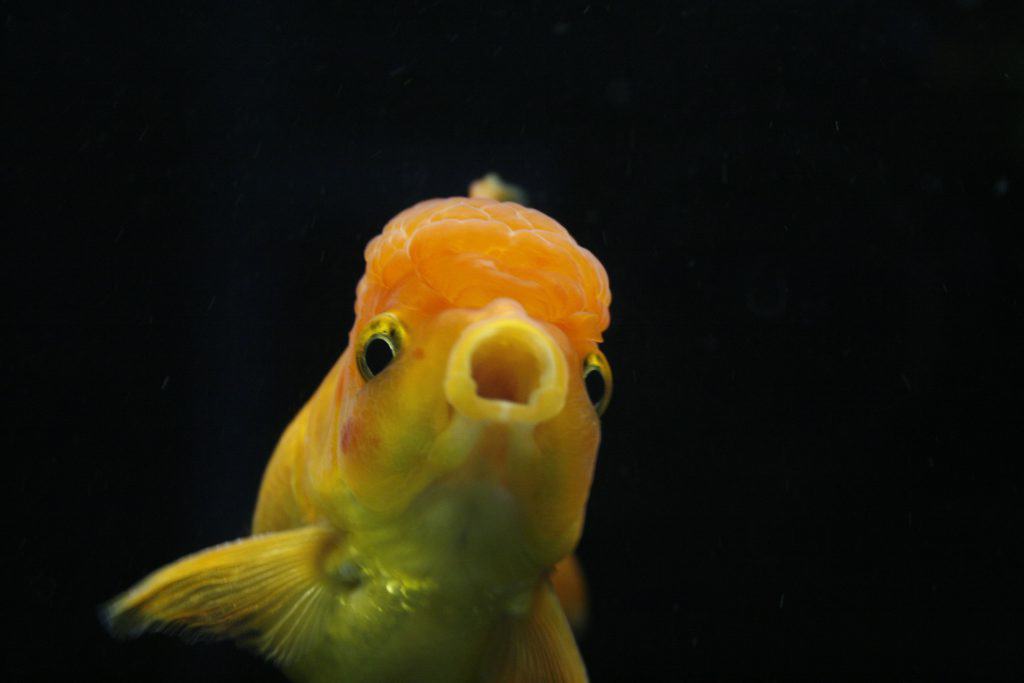
Fancy goldfish are exactly what you expect them to be: silly, funny, enthusiastic, clumsy and super friendly. I’ve been keeping them for almost two years now and I’ve just totally fallen in love with their adorable personalities. They get incredibly excited when anyone gets close to the tank and can usually be hand-fed without a problem. Individual fancies seem to have their own personalities; some are a bit more shy, while others will push everyone aside to get to the food first.
If you’re interested in keeping fancy goldfish, do your research first! Goldfish bowls are unfortunately not a good idea – your goldies are actually going to need a big tank with a big filter and good quality food. Read the Fancy Goldfish Caresheet before running out to the pet store to save yourself a lot of trouble.
If you have any more suggestions for this list, if you have questions about one of the fish or if you just want to share your experience, leave a comment below. Happy fishkeeping!