
For beginning aquarists the choice in fish you are confronted with when stepping into a fish store might be a bit confusing. The fact that staff is often not helpful at all and will usually give you bad advice doesn’t make things easier. Which fish are easy to care for and won’t go belly-up at the slightest beginner mistake, but are also active and fun to watch?
Keep reading for a short list with a few good beginner choices!
Note: As you can see in the requirements of these fish, it’s best to get at least a 15 gallon (57L) aquarium. This way, mistakes will have a smaller impact and there are more choices when it comes to fish.
For more information on which fish to definitely avoid when setting up an aquarium as a beginner, check out Aquariadise presents: the 8 worst beginner fish.
Pygmy and dwarf Corydoras (Corydoras pygmaeus, hastatus, habrosus)
Pygmy and dwarf Corydoras (pictured above) are one of the smallest Corydoras catfish varieties available. They are suitable for beginners who are setting up an aquarium with only peaceful fish and invertebrates, as they are very docile, won’t eat baby dwarf shrimp and will not form territories or bother other fish. Their behaviour is often described as “cheerful” because they are very active and always looking for food. They are especially perfect for planted shrimp aquariums.
Keep pygmy Cories in groups of at least around 8 (they will become shy and scared in smaller groups) in a cycled, heated aquarium of 10 gallons (38L) or more. The substrate should be sand. Filter or river sand is best, as Corydoras like to dig around the bottom and gravel wears down their barbels, permanently leaving them unable to properly search for food.
For more info on pygmy Cories, check out the Pygmy Corydoras caresheet.
Harlequin rasbora, red rasbora (Rasbora heteromorpha)
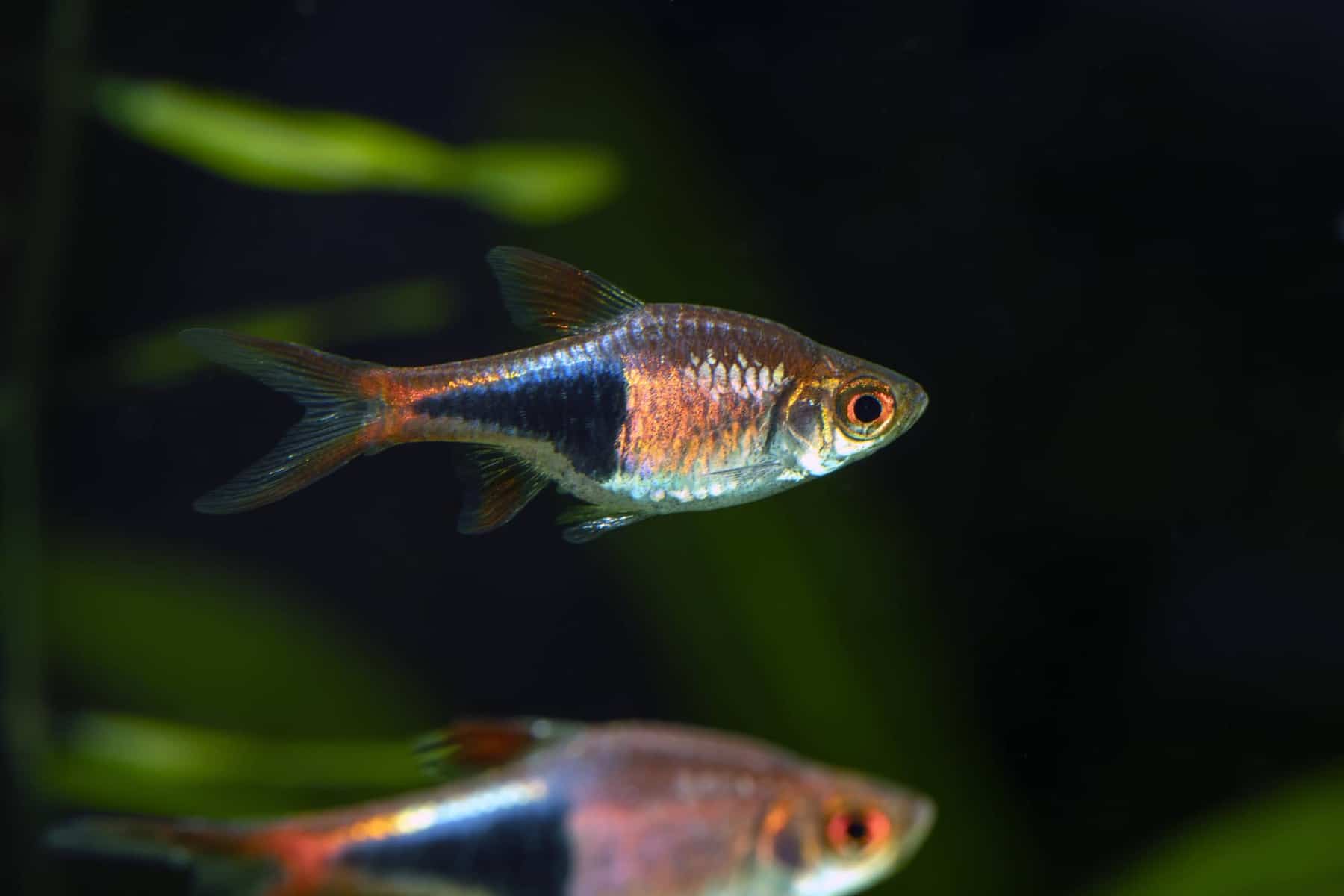
Harlequin rasboras are active, peaceful shoaling fish that, in the wild, inhabit peat swamp forests in Asia and therefore prefer slightly acidic waters and dark substrate in the aquarium. They can adapt to many types of water values, though, as long as the water is clean and nitrite and ammonia values are always at 0.
When kept in groups of at least 6-7, these little fish will usually school very well, making them a wonderful focal point and a long-time favourite in the aquarium hobby. Few things look better than an aquarium with a group of at least 20 schooling fish elegantly swimming around together!
Keep harlequin rasboras in cycled aquariums of at least around 13 gallons (50l). Planted aquariums seem to be preferable, along with tankmates that are peaceful and non-territorial. The pygmy Corydoras discussed above make a great choice.
Endler’s guppy (Poecilia wingei)
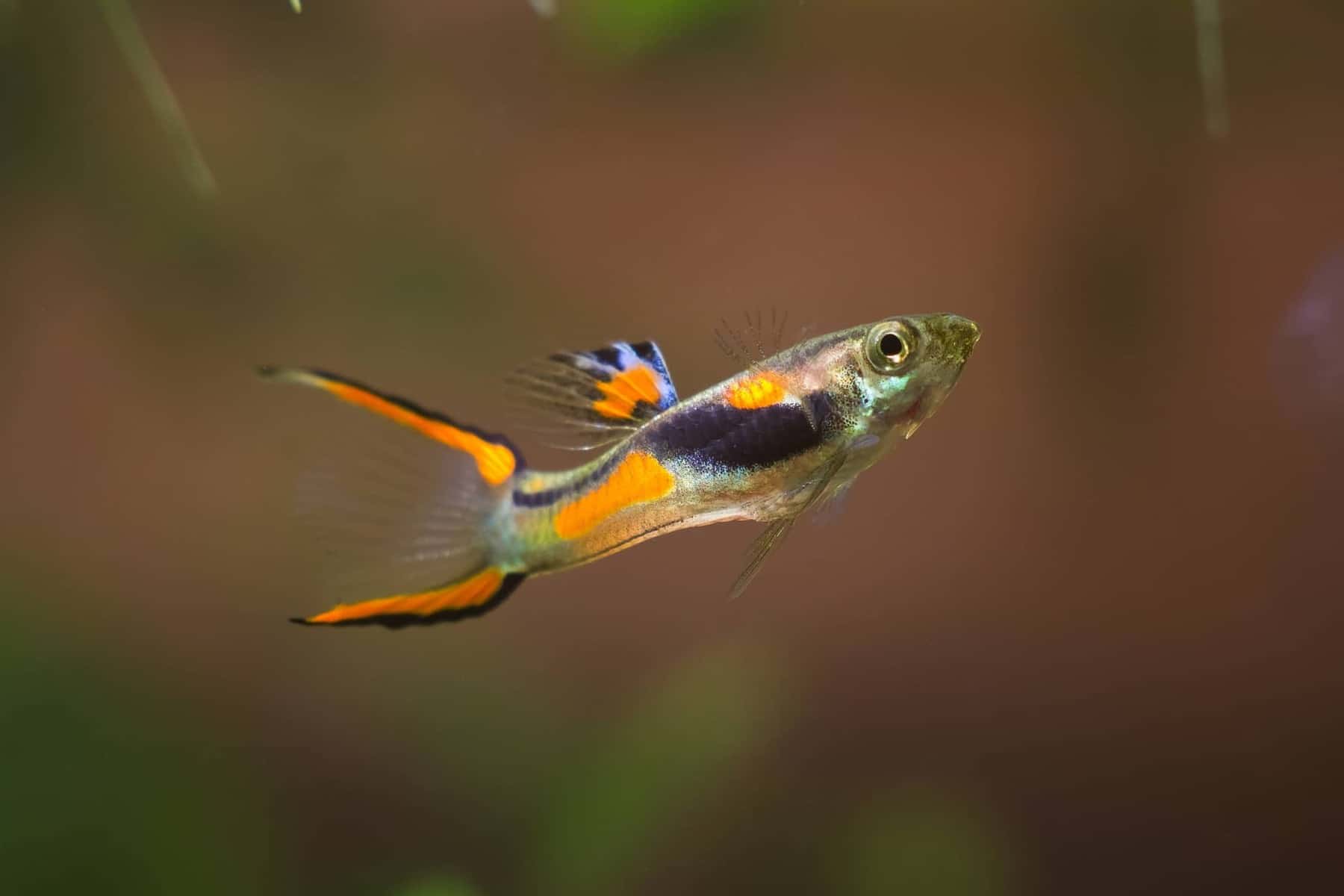
Guppies have always been popular as beginner fish because of their fancy colors, but unfortunately most fancy guppies have been over-medicated and inbred for so long they’ve become weak and susceptible to illness – making it quite the challenge to care for them, which is completely the opposite of what a beginner wants. But do not despair!
Endler’s guppies are a wild form of guppy. This means they are usually much hardier than fancy ones. They are active and fun to watch, often eventually recognizing when food will appear, which results in “begging” and following people who are near the aquarium. The males are beautifully colored.
Like all guppies, Endler’s guppies are prolific breeders. If you don’t have space, time or money to deal with them constantly producing offspring, consider a male-only group. Keep Endler’s guppies in a group in a cycled aquarium of at least around 15 gallons (57l). Contrary to popular belief, guppy tanks should be heated – 75-81 °F / 24-27 °C is ideal. Try to avoid tankmates that are too aggressive or ones that prefer very calm tank mates.
White cloud mountain minnow (Tanichthys albonubes)
This shoaling fish may be tiny, but that doesn’t mean it can’t be a beautiful centerpiece. Its beautiful colors, active schooling behaviour and hardiness make it a great choice for beginners. The temperature range they are naturally exposed to (41-86 °F / 5-30 °C) means they can be kept in many types of settings as long as temperatures don’t fluctuate too much: unheated indoor aquariums, outdoor ponds during the summer months and regular tropical aquariums, although the temperature in these shouldn’t be too much higher than 73 °F / 23 °C.
Keep your white cloud mountain minnows in groups of at least 6 (more is better!) in an aquarium of at least around 15 gallons, as they love to swim. Some hiding places in the form of rocks or plants and a large open space in the middle seems to be ideal for them.
If you’re interested in keeping these minnows, check out the White cloud mountain minnow caresheet.
Betta (Betta splendens)
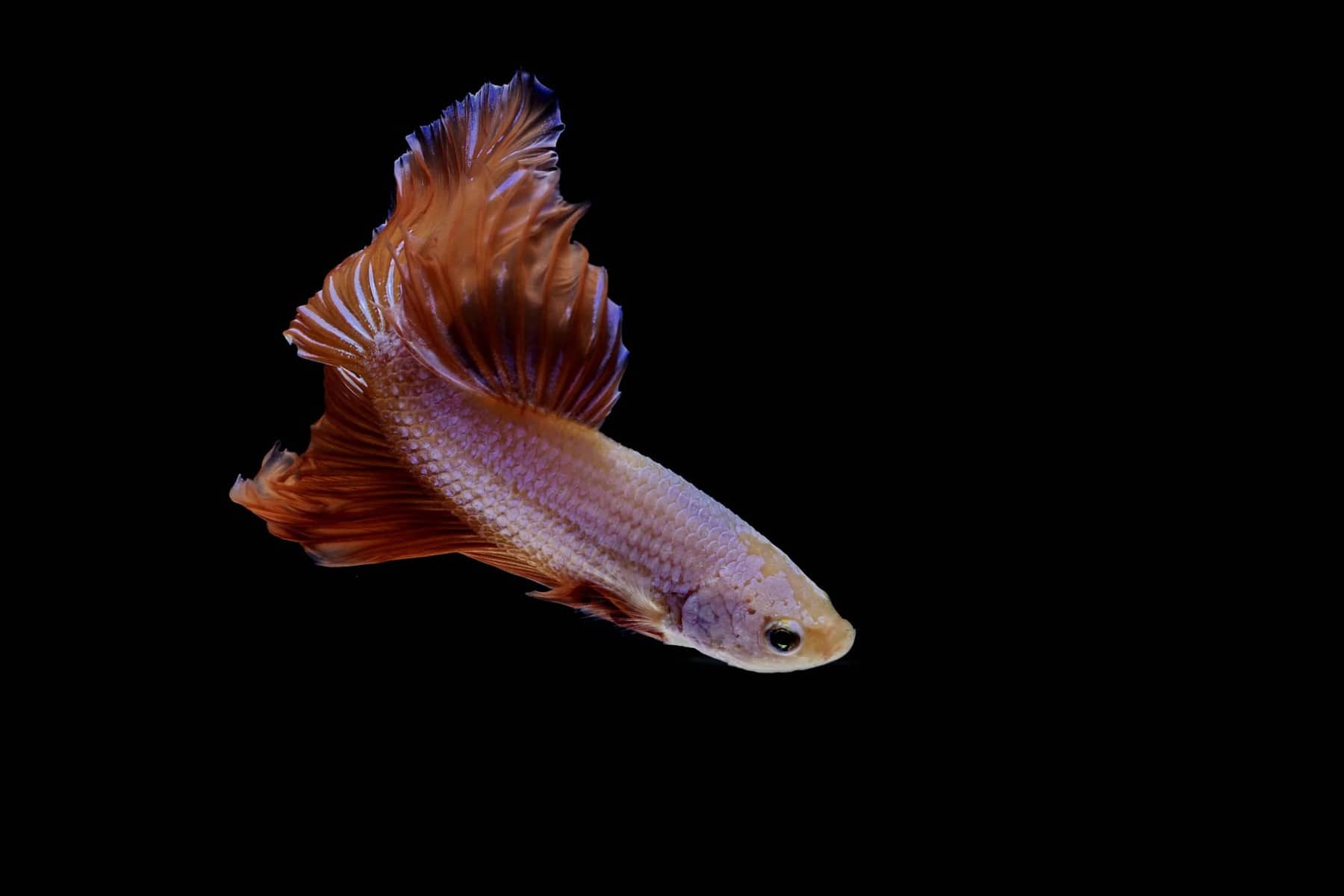
Although they are often treated badly, kept in small unfiltered, unheated bowls, vases and tiny tanks and regarded as “decorations”, which often kills them within a few weeks or months, a well-housed betta is actually very easy to care for. They can withstand a broad range of water values and their attractive colors and fun personality make them perfect for anyone who is looking for a beautiful fish to really interact with.
A single betta fish (the ones sold in pet stores are usually male) can be kept in a well-planted aquarium of at least 5 gallons (20 l) as long as it’s cycled and heated. If you want to keep your betta with other fish, go for an aquarium of at least 10-15 gallons (~40-55l). Choose your Betta tankmates carefully, as bettas can be aggressive and territorial and prefer to be around calmer fish.
If you’re considering purchasing a betta, have a look at the betta care sheet for more information on keeping them.
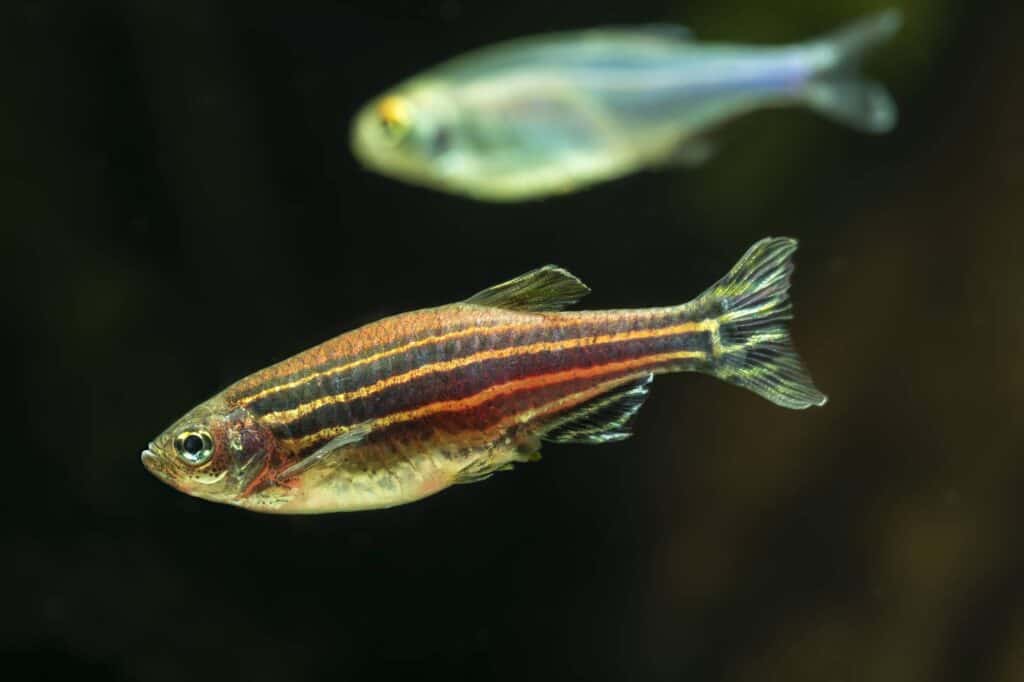
Zebra danio (Danio rerio)
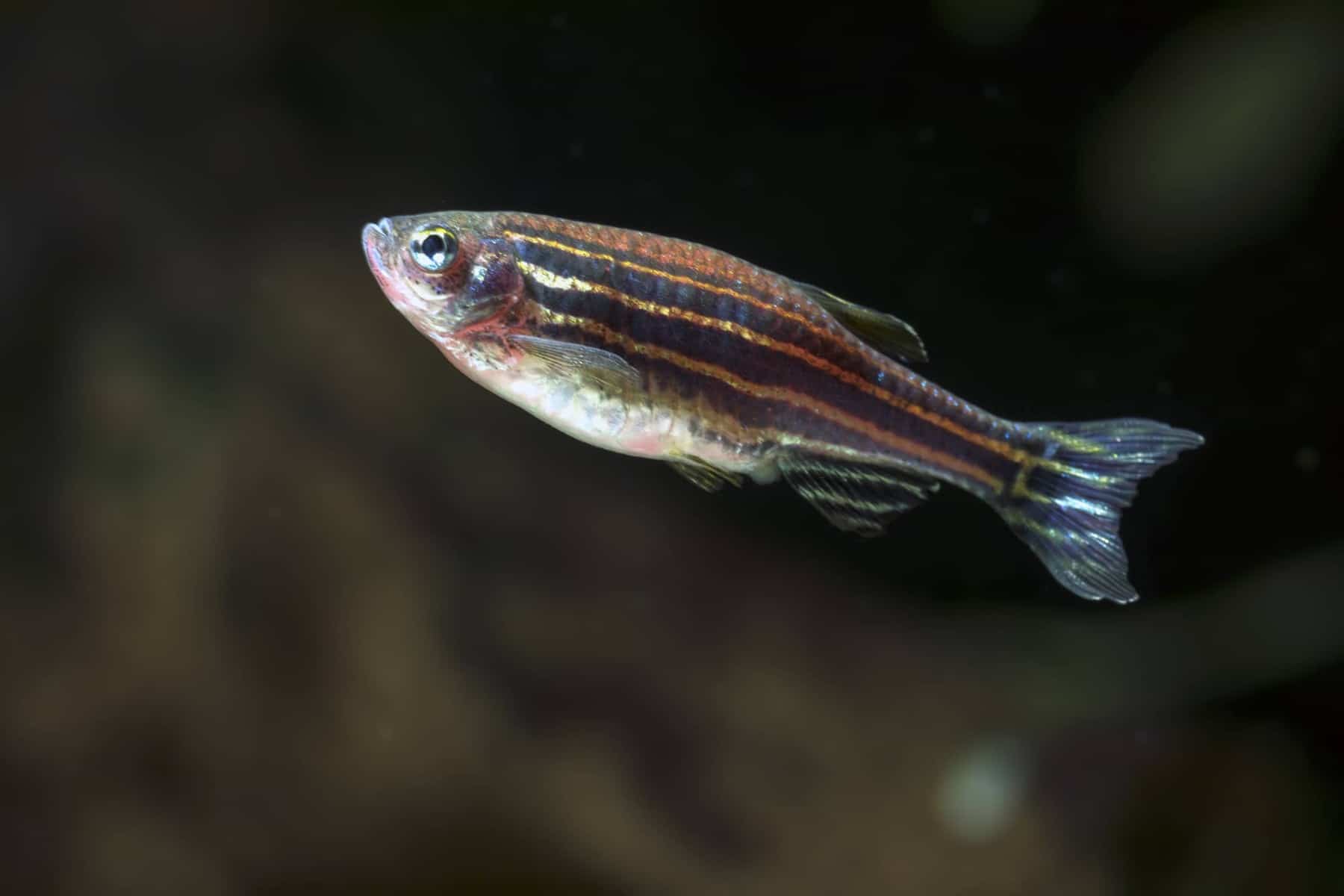
The zebra danio is a shoaling fish that’s been around in the aquarium hobby for many years. They are active, pretty, quite hardy and, when provided with the right care, can live for up to 5 years. One factor that often leads to premature death in zebra danios is temperature – they actually don’t do very well in fully tropical temperatures and will live much longer when kept at 64-74 °F / 18-24 °C. This means they can be kept in ponds during the summer months and, in some climates, permanently!
Zebra danios grow to an adult size of 2 inches (6 cm) and are active swimmers so keep them in a long aquarium – a 20 gallon (75l) is ideal and will give them plenty of room to swim. They are generally quite peaceful and will leave most tankmates alone, but be careful with fish that have long fins as they might be nipped at.
You can find a full zebra danio caresheet here.
Hopefully this list has made choosing the right fish for your tank a little bit easier. If you’re looking for some additional info or if you think I forgot to include a fish, leave a comment below. Happy fishkeeping! And if you’re about to start your first aquarium, good luck.


