You’ve spotted these striped, eel-like fish at the pet store and now you’re hooked. Kuhli loaches are one of the most charming bottom-dwellers in the hobby — shy but curious, peaceful but active, and endlessly entertaining once they settle in.
Quick Care Overview
Scientific Name & Common Names
Pangio kuhlii (formerly Acanthophthalmus kuhlii) goes by several names: kuhli loach, coolie loach, leopard loach, and slimy loach. The last nickname comes from the protective mucus coating on their skin.
Natural Habitat
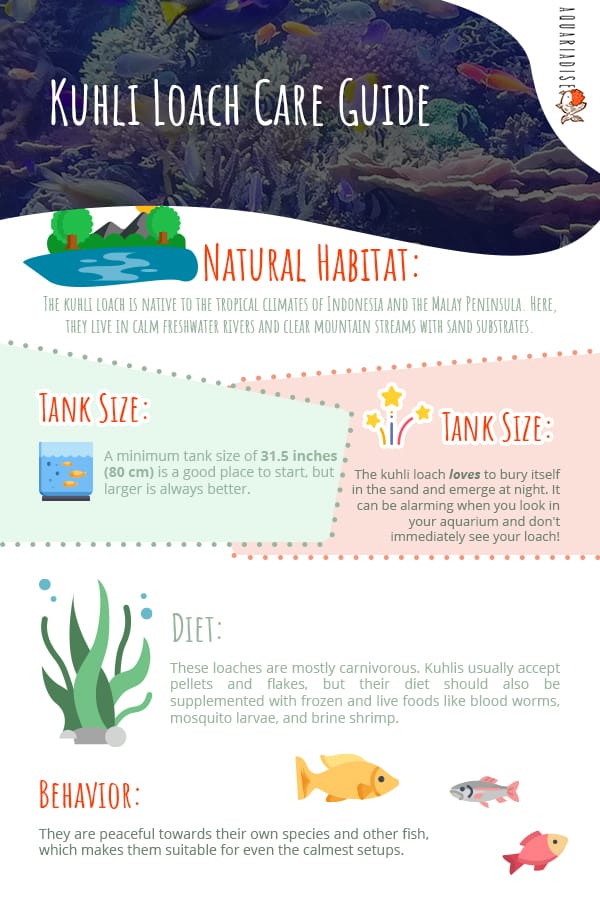
Kuhli loaches are native to Indonesia and the Malay Peninsula, where they inhabit calm freshwater rivers and clear mountain streams. Their natural environment features soft, sandy substrates, acidic water (pH 5.5-6.5) stained with tannins, and dense forest cover that keeps light levels low.
These fish are nocturnal and naturally social. While they don’t school in the traditional sense, they congregate in loose groups and feel more secure with company. In the wild, they use their four pairs of barbels to sift through substrate and detritus for food.
Did You Know?
Wild populations of Pangio kuhlii show such dramatic variation in their yellow and black patterns that scientists believe they may eventually be classified as separate subspecies.
Identification
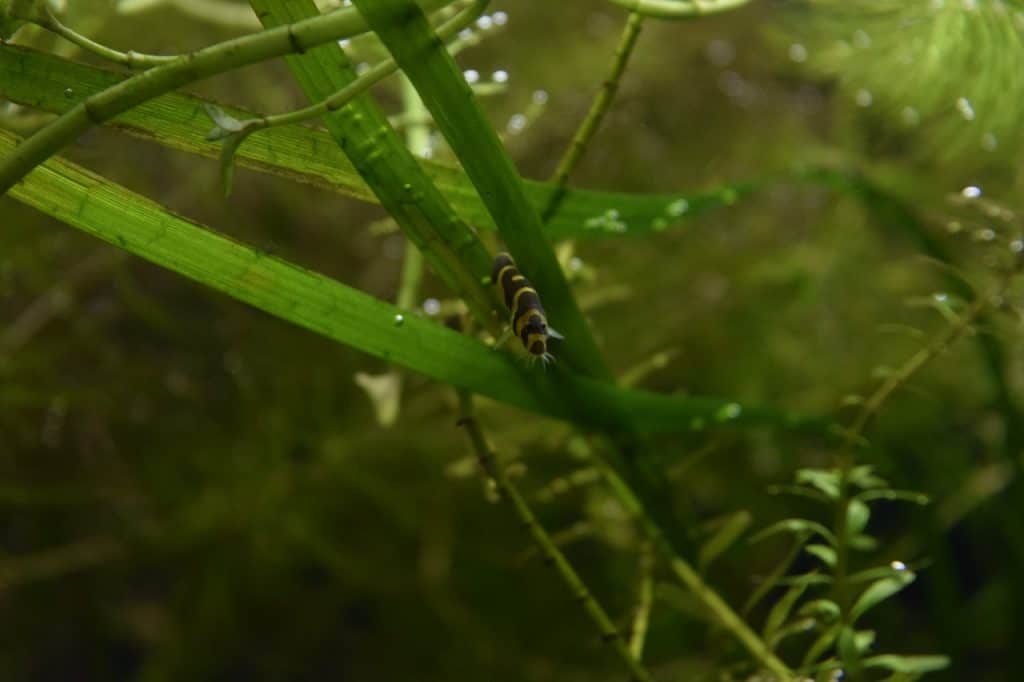
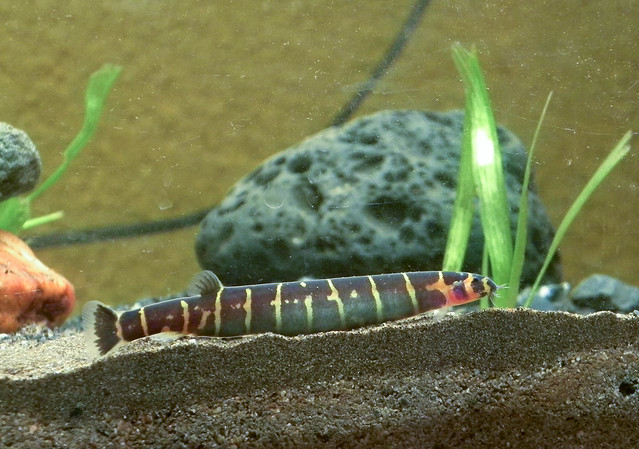
Kuhli loaches have a distinctive eel-like body with a yellow-orange base color and dark brown to black vertical bands. They have very small scales on their bodies and none on their heads, which makes them more sensitive to medications than fully-scaled fish.
In aquariums, they typically reach about 4 inches (10 cm). Sexing is difficult — females carrying eggs appear slightly broader, but otherwise males and females look nearly identical.
Tank Requirements
Floor space matters more than water volume for kuhli loaches. A 20-gallon long tank (31.5 inches / 80 cm) works well for a small group, but longer tanks are always better.
Substrate
Sand is essential. Kuhli loaches burrow, sift, and rest on the substrate constantly. Gravel can damage their barbels and bellies, making feeding difficult and leaving them prone to infection.
Hiding Spots
Kuhlis need places to retreat during the day. Counterintuitively, the more hiding spots you provide, the more often you’ll see them out exploring. Options include:
- PVC pipes or ceramic shrimp caves
- Dense plantings and leaf litter
- Driftwood with crevices
- Indian almond leaves (which also tint the water and lower pH naturally)
Group Size
Keep at least 5 kuhli loaches together. In smaller numbers, they hide constantly and rarely explore. In groups, they gain confidence and become far more active and visible.
[WARNING] Filter Intake Protection
Kuhli loaches will explore any gap that fits their body — including filter intakes. Cover all intake tubes with a sponge pre-filter or fine mesh. Check filter housings after water changes, as spooked loaches may have hidden inside.
Compatible Tankmates
Kuhli loaches are extremely peaceful and need calm tankmates that won’t outcompete them for food or stress them into hiding. Good options include:
- Rasboras and small tetras
- Corydoras catfish
- Peaceful gouramis (honey, pearl, sparkling)
- Danios
- Otocinclus
Avoid aggressive or territorial fish like cichlids, as kuhlis will simply disappear for weeks at a time rather than compete.
Invertebrates: Keep shrimp and snails with caution. While kuhli loaches aren’t active hunters, they are opportunistic carnivores and may eat shrimplets or small snails they encounter during their nightly foraging.
Disease Susceptibility
Because kuhli loaches have reduced scales, they absorb medications more readily than fully-scaled fish. When treating your tank:
- Start with half the recommended dose of any medication
- Avoid copper-based treatments entirely
- Remove loaches to a hospital tank if aggressive treatment is needed for other fish
Common issues include ich (white spot disease) and skin infections, both often triggered by poor water quality or temperature fluctuations.
Diet & Feeding
Kuhli loaches are carnivores that feed primarily on small invertebrates, larvae, and organic matter in the wild. In aquariums, offer a varied diet:
- Staple foods: Sinking pellets or wafers designed for bottom feeders
- Protein supplements: Frozen or live bloodworms, brine shrimp, mosquito larvae, daphnia
- Occasional treats: Blanched zucchini or cucumber (they’ll pick at it)
[TIP] Feeding Tip
Feed after lights out, at least initially. Kuhli loaches are nocturnal and may not emerge during the day, especially when new to a tank. Once settled, you can gradually shift them to daytime feeding on a schedule.
Behavior & Personality
The best part of keeping kuhli loaches is watching them interact. They pile into hiding spots together — sometimes a dozen loaches crammed into a single cave — and emerge at dusk to explore every inch of the tank in winding, snake-like movements.
New kuhli loaches often hide for days or even weeks after introduction. This is normal. If you’ve provided sand substrate, adequate hiding spots, and peaceful tankmates, they’ll eventually emerge. Panicking and rearranging the tank to find them only delays their adjustment.
Once comfortable, kuhlis become surprisingly bold. They’ll investigate new objects, “dance” vertically along the glass, and even rest on plant leaves near the surface.
Breeding Kuhli Loaches
Captive breeding is rare and poorly documented. The general approach involves:
- Conditioning adults with high-protein foods
- Performing a water change with slightly cooler water to simulate seasonal rains
- Providing fine-leaved plants or spawning mops for egg attachment
Eggs are adhesive and typically scattered among plants and driftwood. Fry are tiny and require infusoria or microworms initially, graduating to baby brine shrimp as they grow.
If you’ve successfully bred kuhli loaches, I’d love to hear about your experience — documented breeding reports are still uncommon in the hobby.
Frequently Asked Questions
How many kuhli loaches should I keep together?
Keep at least 5 kuhli loaches. In smaller groups, they remain hidden and stressed. Groups of 6-10 display the most natural, confident behavior.
Why is my kuhli loach hiding all the time?
New kuhlis often hide for 1-3 weeks while acclimating. Other causes include too few hiding spots (counterintuitively, more hides = less hiding), aggressive tankmates, or keeping them in too small a group.
Can kuhli loaches live with shrimp?
Adult shrimp are generally safe, but kuhlis may eat shrimplets they encounter while foraging. If you’re breeding shrimp, keep them in a separate tank.
Do kuhli loaches need sand substrate?
Yes. Sand allows them to burrow and sift for food without damaging their delicate barbels. Gravel can cause abrasions and infections.
How long do kuhli loaches live?
With proper care, kuhli loaches can live 10-14 years in captivity. They’re a long-term commitment.
Final Thoughts
Kuhli loaches reward patient fishkeepers with years of entertainment. Give them sand, hiding spots, a few companions, and peaceful tankmates, and you’ll have a thriving group of these unique bottom-dwellers exploring your tank for over a decade.

Cover photo: Nathalie Nyman