
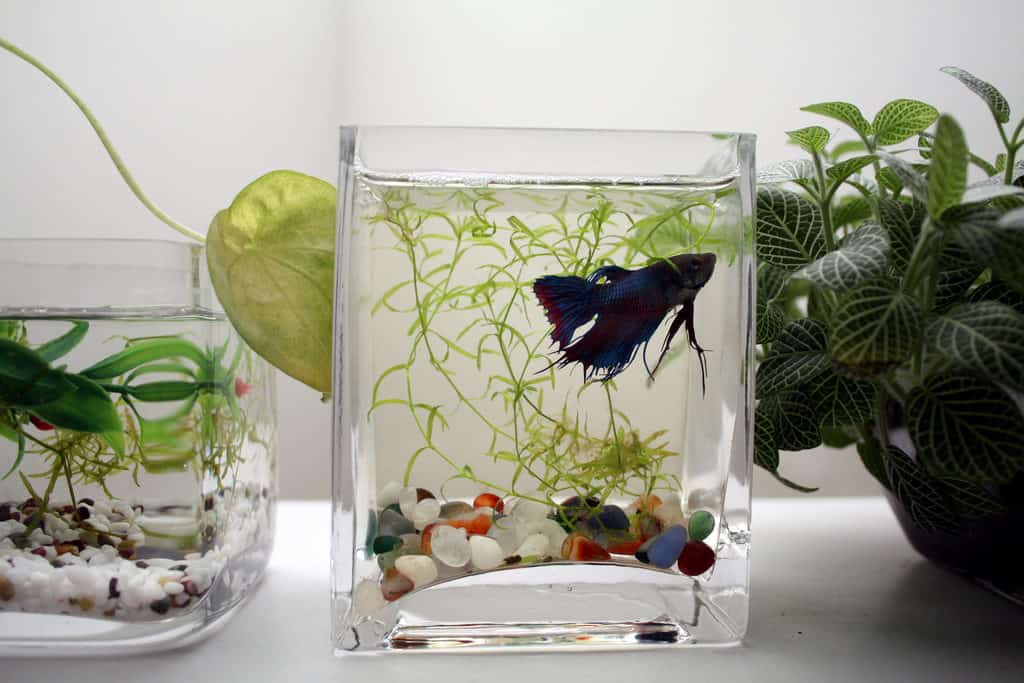
Your betta is slowly dying in that bowl — and it’s not your fault. Pet stores sell betta bowls, vases, and tiny “aquariums” by the thousands, and most of them come with care instructions that are flat-out wrong. The result? Bettas that should live 3-5 years die within months.
Quick Answer
Betta bowls are harmful because they cannot be properly heated or filtered, leading to toxic ammonia buildup, temperature swings, chronic stress, and disease. Bettas need a minimum of 5 gallons with a heater and filter to stay healthy.
Even though awareness about betta care is slowly spreading, misinformation remains rampant. Bettas are tropical fish that need stable, warm, filtered water — not decorative vases or desk ornaments. Here’s why bowls fail and what your betta actually needs.
Betta Myths That Keep Fish in Bowls
These myths have been repeated so often that even well-meaning pet store employees believe them. Let’s set the record straight.
Myth: Bettas live in tiny puddles in the wild
Reality: Wild bettas live in rice paddies, shallow streams, and marshes that span acres. The water may look murky because it’s tannin-stained from leaves and plants — but it’s not dirty or cramped. These habitats have constant water flow and massive volume compared to any bowl.
Your betta won’t “freak out” in a larger tank. If it seems stressed in more space, add plants and hiding spots like Java fern — the fish needs cover, not confinement.
Myth: Bettas can survive eating plant roots in a vase
Reality: Bettas are carnivores. In the wild, they eat insects, larvae, and small crustaceans. Plant roots provide zero nutrition — a betta in a vase will slowly starve.
[WARNING] Surface Access Is Critical
Bettas breathe air using a labyrinth organ. If plant roots block the water surface, your betta can suffocate. They must always have clear access to the top of the water.
Myth: Desktop “aquaponics” systems eliminate maintenance
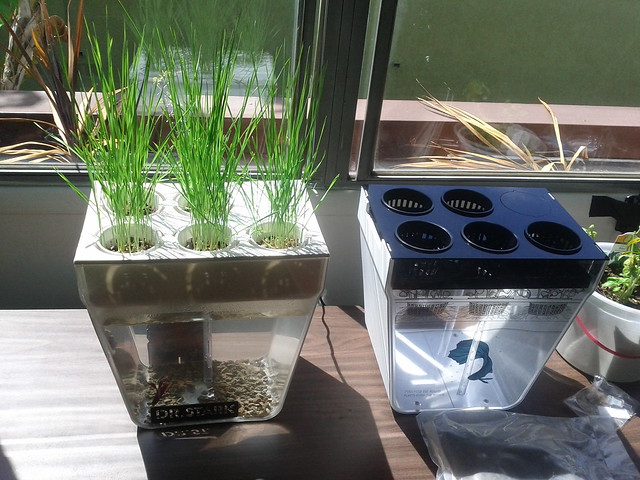
Reality: Those tiny self-cleaning tanks with plants on top? Marketing fiction. Real aquaponics requires substantial water volume and biological filtration. A 1-gallon container with a plant cannot process the ammonia a betta produces. These systems still need heating, cleaning, and water changes — but they’re too small to do any of it effectively.
Myth: Bettas don’t need heaters
Reality: Bettas are tropical fish from Thailand and Cambodia, where water temperatures stay between 76-82°F (24-28°C). This myth exists because it makes impulse purchases easier — no extra equipment needed!
A betta kept below 76°F becomes lethargic, stops eating, and becomes vulnerable to disease. Room temperature in most homes (68-72°F) is too cold. You need a reliable heater like this adjustable thermostat model.
Why Bowls Actually Kill Bettas
The myths above explain what pet stores get wrong. Here’s the science of why bowls fail.
No room for essential equipment
A round bowl can’t accommodate a heater or filter — and if you somehow fit them, they take up most of the swimming space. Small rectangular tanks aren’t much better. The equipment may fit, but it won’t function properly.
Ammonia builds up dangerously fast
Here’s the math that matters:
In a 10-gallon tank, a small piece of uneaten food breaks down slowly. Beneficial bacteria in the filter convert ammonia to nitrite to nitrate. The large water volume dilutes any spikes. Your water parameters stay stable.
In a 1-gallon bowl with no filter, that same piece of food can spike ammonia to lethal levels within hours. There’s no bacterial colony to process it and no water volume to buffer it. By the time you notice something’s wrong, your betta may already have chemical burns on its gills.
[FACT] Establishing a stable nitrogen cycle in less than 5 gallons is extremely difficult. Water parameters in small containers fluctuate constantly, keeping fish in a state of chronic stress.
Temperature swings cause constant stress
Small water volumes change temperature rapidly. A sunny window, air conditioning, or even opening a door can swing a 1-gallon bowl several degrees in an hour. For a tropical fish that evolved in stable warm water, this is exhausting. The constant physiological adjustment weakens the immune system over weeks and months.

Chronic stress leads to disease
Bettas are often called “hardy” — and they are, in the sense that they can survive poor conditions longer than many fish. But survival isn’t thriving. A stressed betta with a suppressed immune system will eventually develop:
- Fin rot — bacterial infection that eats away the fins
- Ich — parasitic infection appearing as white spots
- Velvet — parasitic infection with a gold dust appearance
- Fungal infections — cottony white growths
- Popeye — fluid buildup behind the eyes from internal bacterial infection
Medication can treat these conditions, but it’s treating symptoms of the real problem: inadequate housing. Medicate a fish and put it back in a bowl, and the disease will return.
What Your Betta Actually Needs
Minimum Betta Requirements
A 5-gallon tank like this Marina kit is the minimum for stable water parameters. Larger is always better — a 10-gallon tank is actually easier to maintain because it’s more forgiving of small mistakes.
[TIP] Pro Tip
Some sources say 2.5 gallons is acceptable. It’s possible for experienced keepers, but not recommended. Water parameters are harder to stabilize, mistakes are less forgiving, and you’ll spend more time on maintenance — not less.
Your betta tank needs:
- A filter — necessary to establish the nitrogen cycle that keeps ammonia at zero. Choose one with adjustable or gentle flow; bettas don’t like strong currents.
- A heater — with a thermostat to maintain stable temperature. Non-adjustable preset heaters work but give you less control.
- A test kit — liquid drop test kits are far more accurate than strips. Test weekly, especially in newer tanks.
- Plants and hiding spots — live or silk plants help bettas feel secure. Avoid sharp plastic decorations that can tear fins. [INTERNAL LINK: “easy live plants for beginners” -> beginner aquarium plants]
Conclusion
Betta bowls remain on store shelves because they’re cheap and they sell — not because they work. The fish inside them survive despite their housing, not because of it.
Your betta can live 3-5 years in proper conditions. In a bowl, you might get months. The difference is a heated, filtered, adequately sized tank with stable water parameters — the same basic requirements as any other tropical fish.
For step-by-step setup guidance, Betta Than A Bowl covers everything from cycling to decoration. You can also check out this comprehensive 12-chapter guide.
Frequently Asked Questions
Can a betta survive in a bowl temporarily?
Bettas can survive short periods in bowls (a few days during tank cycling or emergencies), but this should never be permanent housing. Even temporarily, monitor for signs of stress and perform daily partial water changes.
What’s the smallest tank a betta can live in?
5 gallons (20L) is the minimum recommended size for a single betta. While experienced keepers sometimes use 2.5 gallons, smaller volumes are much harder to keep stable and require more frequent maintenance.
Do bettas really need a heater?
Yes. Bettas are tropical fish requiring 76-82°F (24-28°C). Room temperature in most homes is too cold and too variable. Without a heater, bettas become lethargic, stop eating, and become susceptible to illness.
Why do pet stores sell bettas in cups and bowls?
Cost and convenience. Small containers are cheap, take little shelf space, and make impulse purchases easy. Male bettas also can’t be housed together, so individual containers prevent fighting. Unfortunately, this doesn’t mean cups are appropriate long-term housing.
How long do bettas live in bowls vs. proper tanks?
In bowls, bettas typically survive 6 months to a year before succumbing to disease or organ damage from chronic stress. In properly maintained 5+ gallon heated, filtered tanks, bettas commonly live 3-5 years.
Have questions about upgrading your betta’s housing? Leave a comment below.
Cover photo: IMG_7138 by portablematthew


