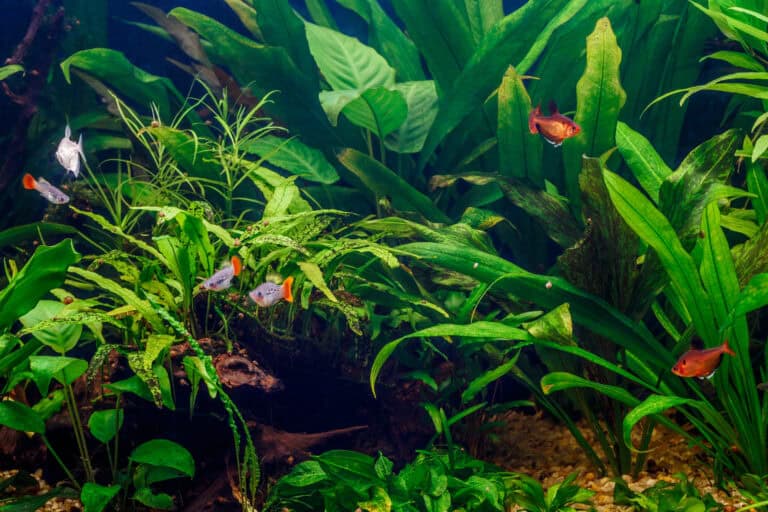
There are plenty of reasons to want to go for fast growing live plants in your aquarium. Some fish love to nibble on plants, so it’s a great idea to grow them separately to add some variety to their diet. Fast growers compete with algae, are usually relatively easy to care for and can really help achieve that lush, overgrown jungle look!
Keep reading for a list of 8 super fast growing aquarium plants.
If you’re looking for a list of easy aquarium plants for beginners, this article might be helpful.

Aquatic Arts Live Hornwort Pond Plant Bundle
Large live Hornwort bunches offering dense growth and natural filtration for ponds and aquariums.
Check Price on Amazon
Striking Red Aquatic Plant
A vibrant red aquatic plant that offers both visual appeal and shelter for fish.
Check Price on Amazon
SubstrateSource Brazilian Pennywort Aquarium Plant
Live Brazilian Pennywort plant that beautifies and oxygenates freshwater aquariums.
Check Price on AmazonRed tiger lotus, Nymphaea lotus var. Red
Although red plants are usually quite difficult to grow and can require enormous amounts of light to trive, this is not the case for the red tiger lotus, which does well in medium lighting and is actually quite easy to grow. In lower lighting conditions, the leaves will grow all the way towards the surface; if you have stronger lights, the plant will stay a bit more compact.
To grow your tiger lotus, place the bulb no more than halfway into the substrate in the background or middle of the aquarium. The ones found at your aquarium store usually have small leaves or none at all, but will quickly start growing and can reach huge sizes with big, round leaves that are appreciated by fish that like to rest on plants such as long finned bettas and small catfish. If the plant reaches the surface, you may even be rewarded with a lovely pink flower!
Striking Red Aquatic Plant
Check Price on AmazonBrazilian pennywort, Hydrocotyle leucocephala
Hydrocotyle, also known as pennywort, is a stem plant that naturally grows in swamps and marshes and is available in many different varieties. The type discussed here, Hydrocotyle leucocephala (Brazilian pennywort), is one of the most versatile plants in the aquarium hobby.
It forms long, vertical stems with round leaves and looks great as a background plant, but can also be left free floating or even be grown emersed! Parts that are above the water surface can produce small flowers and it makes a great paludarium plant. Temperature is rarely a problem, as this plant does well in a very wide range and will almost always grow very quickly, especially if plenty of light is provided.
If you’re looking for a foreground plant you can trail your Brazilian pennywort across the bottom of the tank or look into other Hydrocotyle varieties like Hydrocotyle verticillata.
SubstrateSource Brazilian Pennywort Aquarium Plant
Check Price on AmazonHornwort, Ceratophyllum submersum
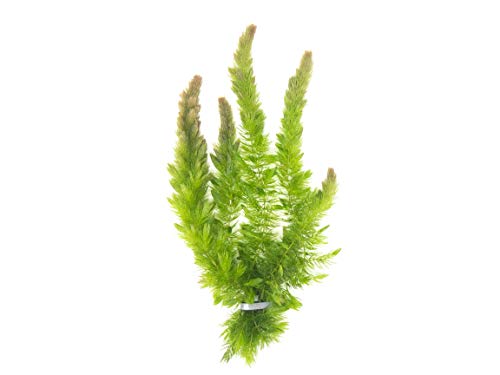
If there’s one plant we can’t miss on a list of fast growing aquarium plants it’s definitely hornwort. This stem plant has been a part of the aquarium hobby for a very long time and is well known for its quick growth. It also does well in a huge range of temperatures and water values, has a decorative fuzzy appearance and can be planted in the substrate, left free floating or attached to a suction cup to use in aquariums without substrate.
Hornwort is a great option for fry tanks, as infusoria will grow on it and it makes a great hiding place for small fish, . It can aslso be used in ponds. It grows well under relatively low lighting, but will definitely appreciate plenty of light and produces red leaves at the top of its stems when this is supplied.
Aquatic Arts Live Hornwort Pond Plant Bundle
Check Price on AmazonGiant hygro/temple plant, Hygrophila corymbosa
Giant hygro definitely lives up to its name and makes a great background plant for larger aquariums. It has large, broad leaves and can reach a size of up to 24 inch (60cm).
Hygrophila corymbosa grows very quickly and will need to be trimmed regularly, but in return for this work you’ll end up with a lush green plant even without strong lighting. If you forget to trim, it can actually grow out of the tank and the top leaves may end up blocking all light to the bottom ones, causing them to fall off.
Temperature and water values are of little importance, as it will do great in almost any type of tropical aquarium unless the water is very hot (discus fish setups) or very cold (unheated). If one huge plant isn’t enough, you can also easily propagate your giant hygro by replanting the cuttings.
If you have a smaller aquarium setup but still want to grow Hygrophila, don’t despair. There is also a compact version!

PLANTEREST Hygrophila Corymbosa Aquarium Plant
Check Price on AmazonAmazon sword, Echinodorus varieties
Another huge background plant that makes a great focal point (but luckily also comes in compacter versions for smaller aquariums) is the Amazon sword. It lends its name from the sword-like shape of the leaves! Amazon sword is a fast grower that will propagate naturally and shoot up new plants close to the mother plant when healthy, essentially creating a thick ‘forest’ on its own when left alone. Fish that need hiding places, such as bettas, will definitely appreciate it.
Amazon swords is very hardy; when I cleaned out a tank that had been sitting with the lights off for multiple months I fully expected to find my sword dead, but it was still bright green and had produced multiple new leaves. It will thrive in a wide range of water values and temperatures and will grow fine under low lighting.
Amazon swords often require some extra nutrients, so if you’re having trouble growing yours you may want to look into getting some root tabs.
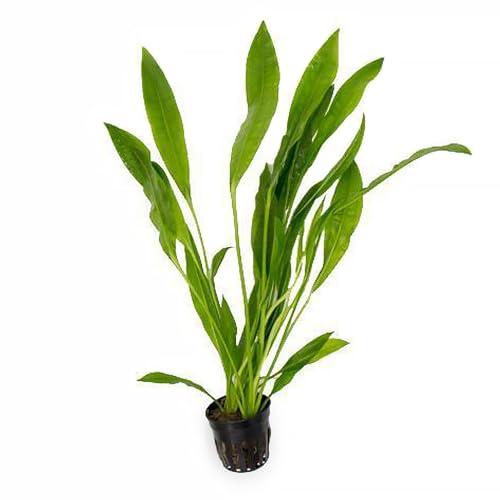
SubstrateSource Echinodorus Peruensis Sword Plant
Check Price on AmazonDuckweed, Lemna minor
Floating plants are really appreciated by fish that come from naturally darker habitats, and luckily there is a very fast grower available in this department as well! Duckweed is mostly known from completely overgrown, green ponds but because it can adapt to almost any temperature and water type, it will also do well in your home aquarium. Its leaves are very small and the roots stay relatively short compared to other floating plants, which makes it a great choice for smaller aquariums. It can also be grown separately to feed plant eating fish; goldfish especially will really appreciate the occasional serving of duckweed.
If you decide to keep duckweed in your main aquarium, keep in mind that it’s such a fast grower it will be very difficult to get rid of if you change your mind. It regularly needs to be thinned out because it may otherwise clog up your filter and prevent proper water flow, and if even one small piece remains it will usually quickly grow back and eventually cover the entire surface again.
That being said, it’s a great plant if you’re looking for a super fast growing floater to provide cover for shy fish or create a natural looking dark aquascape.

2 Cups Live Duckweed (LEMNA Minor)
Check Price on AmazonTo keep in mind…
The aquarium plants mentioned in this article all grow so fast they might require regular trimming. When trimming your aquarium plants, keep in mind that you should never introduce them into the wild. They can destroy local ecosystems. Dry them before discarding or use them as compost!
If you have any more questions about growing these plants or if you want to suggest another super fast grower, be sure to leave a comment below. Happy fishkeeping!