Are you looking into setting up a low-tech planted aquarium but don’t have any experience? There are many sources on the internet that you can use to learn the perfect method but many of them are very confusing and promote their products.
However, this guide is nothing like the others! We have explained everything comprehensively and we have used very simple terms so that you can easily understand and use what you learn here.
This article is a guest post by FishTankSetups.com.
What are Low-Tech Planted Aquariums?
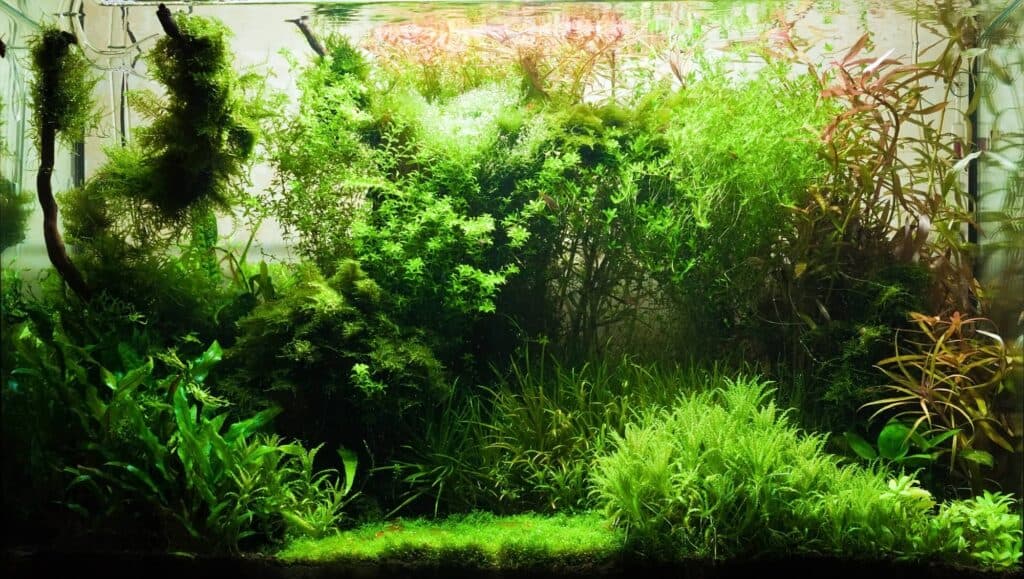
Low-tech planted aquariums are those which require minimal maintenance and sometimes even no maintenance. They also do not require you to change the water of the tank as often. Moreover, you do not have to worry about the CO2 levels at all. These aquariums are much more beautiful and attractive (hardware wise) than others as they have less visible wires present.
The plants in these tanks do not grow at a very fast rate so you will not have to worry too much about trimming them every other week. However, you will have to cut them monthly otherwise they will overgrow and overcrowd your tank.
How to Setup Your Low-Tech Planted Aquarium (Step-by-Step):
Now that you know what they are, why should you get a low-tech planted aquarium? What are the precautions that you should beware of before getting your hands messy? It’s time to start setting up your low-tech planted aquarium.
We have listed the main steps that you should follow below:
1. The Base of the Aquarium (Substrate)
Making sure you have the best substrate for a planted aquarium is always the first thing to consider. It is essential for you to choose the right substrate. Otherwise, you will end up with problems such as your plants dying. You should go for any substrate that’s rich in nutrients and has granules that can for sure let your plants thrive. Great options are ADA soil or Eco-Complete.
*Caution when choosing topsoil.
You might see some people using topsoil capped with a layer of gravel for their low-tech planted aquarium. They do this to save money. However, before going for this particular soil substrate you should know that things can get very messy. If for any reason you need to move/remove a plant (that already established its roots) the soil underneath will surface and cloud your tank, leaving you with a partially muddy tank.
If you don’t know what you’re doing I highly recommend using aqua soil. This also allows you to re-use the soil in the future if you either need to replace or upgrade a tank. In the end, you’re saving money this way instead of going with the topsoil approach.
Ammonia is another problem that you should be concerned about when choosing soil because high ammonia levels can result in harmful algae that might harm your plants. Nevertheless, the soil is very important for the tank so, people use fertilizers for preventing the harmful effects of the soil.
2. Lighting for a Low-Tech Aquarium
When choosing a light for your low-tech planted tank you don’t really need to look for anything too fancy. I highly recommend buying an aquarium LED light. They get the job done and they require less energy than other types of lights on the market.
Some of the best lights I’ve seen are:
- Current USA Satellite Freshwater LED Plus Light
- Finnex Planted+ 24/7 Fully Automated Aquarium LED Lights
- The Finnex FugeRay Planted+
3. Planting
This is one of the most important steps when setting up an aquarium. Firstly, head over to your local fish store to look for low-light plants. (As you can tell by the name) they require less light to grow which makes them perfect for low-tech aquariums. The list of low-light aquarium plants from PlantedTank.net might help.
After all the plants are established perfectly, you should slowly remove the fast-growing plants, as they will pose a problem in the future. These plants take up all the nutrients and leave almost nothing for the others. Removing them too quickly may cause your tank to crash since they aid in removing nitrates from the water.
The high biomass of the plants is very important for their growth. You should always keep your tank free from harmful algae. It will ruin the aesthetics and it will take most of the vital nutrients too. Just remember these facts and you will have the perfect aquarium.
4. Filtration
For the constant purification of the tank, you should add a filter. An excellent filter with a good flow can do wonders, canister filters usually work best. You will have to make sure that you have installed the filter perfectly to get the maximum output from it. You should always place the intake in an open area. I highly recommend using filters without activated charcoal if you plan to use fertilizing in your aquarium.
Maintaining a filter is very easy as well, just make sure that you clean it every once in a while.
5. Fish for a Planted Aquarium
Here are some fish that great for planted aquariums:
- Neon Tetras
- Rainbow Fish
- Discus
- Angel Fish
- Swordtail Fish
Here is a tip: make sure your filtration can handle your bioload. Get a filter that’s recommended for a larger aquarium. However, remember not to add too many fish, you want your plants to stand out as well!
6. Fertilizers
You should get high-quality fertilizers for the aquarium since you don’t have Co2 aiding your plant growth. The dosage of the fertilizers should be given once in a week or two (depending on the size of your tank). You can easily calculate the fertilizer requirement for your tank by using this ratio.
Any local fish store should have fertilizers available. I highly recommend ordering online if you can’t find any locally as they will help your plants thrive.
For better natural growth of the plants. You should skip the fertilizer process once in a while. It will help the plants to remove any excess nutrients to fight algae.
For more in-depth information on fertilizers take a look at AquariumAdvice. They cover everything you need to know about aquarium fertilizers.
Conclusion
Now after knowing everything about low-tech planted aquariums, you can go and buy the necessary equipment and parts and set it up. If you follow this article the right way, you can have a magnificent aquarium of your own. You just have to be a little patient, as the plants will take a bit of time to grow up. Overall, we hope that you successfully set up your very own low-tech planted aquarium.
If you have any more questions about setting up a low-tech planted aquarium or if you want to share your own experiences, don’t hesitate to leave a comment below.