Your tank looks a little empty. Maybe the fish seem stressed, darting around with nowhere to hide. Or perhaps you’ve tried live plants before and watched them slowly turn to mush. Brazilian pennywort might be exactly what you need — it’s one of those rare plants that actually wants to grow in your aquarium.
Quick Answer
Hydrocotyle leucocephala (Brazilian pennywort) is a beginner-friendly aquarium plant that thrives in most tank conditions. Plant stems directly in substrate or float them — both methods work. Provide medium to high light for the bushiest growth, and prune regularly to prevent it from taking over your tank.
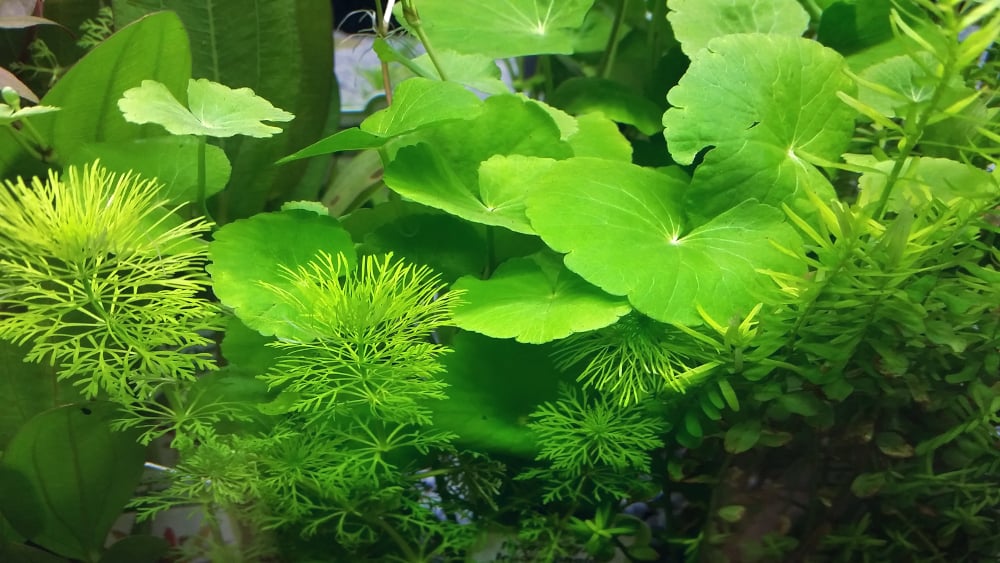
Hydrocotyle leucocephala, commonly called Brazilian pennywort, has remained one of the hobby’s most popular plants for decades. The reason is simple: it grows fast, adapts to nearly any setup, and those distinctive round leaves add beautiful texture and movement to aquascapes. Whether you’re cycling your first tank or designing an elaborate planted display, this species delivers reliable results without demanding expert-level care.
? Quick Care Overview
Planting Hydrocotyle leucocephala
Getting Brazilian pennywort established in your tank couldn’t be simpler. Just push the stems a couple of inches into your substrate — sand, gravel, or planted soil all work fine. The plant sends out roots quickly, usually within a week, and begins anchoring itself without any special treatment. You don’t need plant weights or complicated planting techniques, though tucking the stems near hardscape can help keep them in place until roots develop.
? Versatile placement: Brazilian pennywort works as a midground accent, a lush background curtain, or a free-floating surface plant. Most aquarists use it in the background where it can grow tall, but floating it provides excellent cover for surface-dwelling fish and fry.
Shy fish like Bettas, gouramis, and small tetras appreciate the shelter that floating pennywort provides. The dangling roots also become a natural grazing area, collecting biofilm and microorganisms that shrimp and small fish feed on throughout the day.
Hydrocotyle leucocephala has no issues growing above the waterline, which opens up creative possibilities. In paludariums and ripariums, you can let stems climb out of the water where they’ll develop slightly different-looking emerged leaves. The real treat? Emerged growth produces delicate white flowers — something you’ll never see on submerged plants. This adaptability makes Brazilian pennywort excellent for open-top tanks where you want that natural, overgrown look with plants spilling over the rim.
Hydrocotyle leucocephala Care Requirements
Brazilian pennywort is genuinely hard to kill. It tolerates a wide range of water parameters, doesn’t demand pristine conditions, and bounces back quickly from neglect. That said, giving it what it needs will reward you with dramatically better growth and appearance.
Lighting
This is the single biggest factor affecting how your pennywort looks. Medium lighting is the minimum — the plant will survive but may appear leggy and sparse. High lighting transforms it into a dense, bushy mass with leaves stacking on top of each other. Under weak light, stems shoot upward desperately searching for brightness, dropping lower leaves along the way. If you’re limited to low light, consider floating the plant at the surface where it can access maximum illumination.
CO2 and Fertilization
Added CO2 is absolutely not required. Brazilian pennywort grows well in low-tech tanks without any gas injection. However, if you’re running a high-tech planted setup with CO2, this plant will respond enthusiastically — expect to prune it twice as often. For fertilization, a basic all-in-one liquid fertilizer dosed weekly keeps growth healthy. Root tabs aren’t necessary since this plant primarily feeds through its leaves and stems.
? Pro Tip
If you’re struggling with algae, healthy Brazilian pennywort can help. Fast-growing plants like this one compete directly with algae for nutrients, effectively starving it out. A thriving pennywort colony is one of the best natural algae prevention methods available.
Pruning and Maintenance
Regular pruning isn’t just recommended — it’s essential if you don’t want this plant taking over your entire tank. Brazilian pennywort is on the list of fast growers for good reason. Under favorable conditions, expect several inches of new growth per week. Trim stems back to your desired length, and don’t be shy about it. Pruning actually encourages the plant to branch out, creating a fuller, bushier appearance instead of long stringy stems.
Without regular trimming, you’ll end up with a tangled mess of stems blocking light from everything below. The lower portions will lose leaves and look increasingly sad while the top growth takes off. Set a reminder to check and prune every 1-2 weeks during active growing periods.
Propagation
Propagating Brazilian pennywort borders on effortless. Those trimmings you removed during pruning? Each one is a new plant. Simply stick them back into the substrate or let them float — they’ll develop roots and continue growing as if nothing happened. You can even give cuttings away to other hobbyists; this is one of those plants that spreads through local fish clubs like wildfire because everyone has extras to share.
? Did You Know?
Brazilian pennywort isn’t just an aquarium plant — it’s edible! In some South American countries, the leaves are used in salads and traditional medicine. The plant belongs to the same family as parsley and cilantro. (We don’t recommend eating your aquarium plants, though.)
Troubleshooting Common Problems
Even hardy plants occasionally struggle. Here’s how to diagnose and fix the most common Brazilian pennywort issues:
Slow or Stalled Growth
If your pennywort has stopped growing or is barely putting out new leaves, nutrient deficiency is the most likely culprit. Check that you’re dosing a complete fertilizer regularly. In heavily planted tanks, nutrients get used up faster than you might expect. Also verify that your light is still functioning at full capacity — aquarium bulbs lose intensity over time and may need replacement every 12-18 months.
Leggy, Sparse Appearance
When stems grow tall but leaves are few and far between, insufficient light is almost always the cause. The plant is literally stretching toward the light source, abandoning lower leaves it can no longer sustain. Solutions include upgrading your lighting, raising the light fixture closer to the water surface, or floating the plant where it can access more light directly. A good pruning session can also help — cut stems back hard and they’ll often regrow more densely.
?? Iron Deficiency Warning
If leaves are turning pale yellow or white (especially new growth) while veins remain green, your pennywort is telling you it needs iron. This is called chlorosis, and Brazilian pennywort is particularly sensitive to it. Add an iron supplement or switch to a fertilizer with higher iron content. Improvement usually appears within 1-2 weeks.
Melting After Purchase
Don’t panic if your new pennywort loses some leaves in the first week or two. Plants grown emersed (out of water) at nurseries often go through a transition period when submerged, shedding their emerged leaves and growing new submersed ones. Keep conditions stable, remove decaying matter, and new growth should appear soon. This is normal adaptation, not plant death.
Tank Mates and Compatibility
Brazilian pennywort gets along with virtually all common aquarium inhabitants. Its fast growth means it can recover from minor nibbling, making it more resilient than delicate plants when kept with semi-herbivorous fish. That said, dedicated plant-eaters like silver dollars, large plecos, and goldfish may devour it faster than it can grow.
The plant pairs beautifully with [INTERNAL LINK: “shrimp” -> cherry shrimp care], which love grazing on biofilm that collects on the leaves and stems. Betta fish appreciate floating pennywort as cover, and small schooling fish use dense growth as a refuge when feeling threatened. In breeding setups, the roots of floating pennywort provide excellent hiding spots for fry.
Where to Buy Brazilian Pennywort
As one of the hobby’s classic plants, Brazilian pennywort is widely available through multiple channels. Most local fish stores stock it regularly, and it’s typically one of the more affordable options on the plant rack. Online retailers like SubstrateSource on Amazon ship healthy portions directly to your door.
Perhaps the easiest source? Other hobbyists. Because this plant grows so prolifically, aquarists are constantly pruning and looking to offload cuttings. Check local aquarium club meetings, online forums, or Facebook groups for your area — you can often get Brazilian pennywort for free or trade for other plants and supplies. This is also a great way to get plants that are already adapted to submersed growth, skipping the transition period that nursery plants sometimes require.
? What to Look For When Buying
- Bright green leaves without yellowing or brown spots
- Firm, intact stems (avoid mushy or translucent sections)
- Active root growth is a bonus but not essential
- No visible pests like snails or algae hitchhikers
Frequently Asked Questions
Does Brazilian pennywort need CO2?
No, Brazilian pennywort grows well without CO2 injection. It’s one of the best plants for low-tech setups. Adding CO2 will accelerate growth significantly, but it’s completely optional. Many hobbyists grow lush, healthy pennywort with nothing more than good lighting and occasional liquid fertilizer.
How fast does Brazilian pennywort grow?
Under good conditions with adequate lighting, expect 2-4 inches of growth per week. In high-tech tanks with CO2 and strong lighting, growth can be even faster. Plan to prune every 1-2 weeks to keep it under control and maintain a bushy appearance.
Can I plant Brazilian pennywort in gravel?
Yes, Brazilian pennywort roots easily in plain gravel, sand, or any aquarium substrate. It’s not a heavy root feeder, so you don’t need nutrient-rich planted substrate — though it certainly won’t hurt. The plant absorbs most nutrients through its leaves and stems.
Is Brazilian pennywort the same as regular pennywort?
“Pennywort” refers to several different plant species. Brazilian pennywort (Hydrocotyle leucocephala) has elongated stems with leaves spaced along them. It’s often confused with Hydrocotyle verticillata (whorled pennywort), which grows in a more compact rosette pattern. Both work well in aquariums but have different growth habits and appearance.
Why is my Brazilian pennywort dying?
The most common causes are insufficient light (causing leggy growth and leaf loss), iron deficiency (causing yellowing leaves), or transition shock after purchase. Check that your lighting meets at least medium intensity, dose a complete fertilizer with iron, and give new plants 2-3 weeks to adapt. Melting immediately after purchase is usually temporary.
Have questions about growing Brazilian pennywort in your setup? Share your experiences or ask for advice in the comments below — we’d love to hear how this versatile aquarium plant is working in your tank!