

Looking for a live plant that won’t die on you two weeks after planting? Sagittaria — often called “dwarf sag” by hobbyists — is one of the most forgiving aquarium plants you can grow. It tolerates a wide range of water conditions, spreads on its own without much intervention, and creates a beautiful grass-like carpet that makes any tank look more natural.
Quick Answer
Sagittaria subulata is a hardy, grass-like aquarium plant that thrives in moderate lighting, tolerates pH from 6.5–7.5, and spreads via runners to form a natural carpet. It’s ideal for beginners and works in tropical, coldwater, and even brackish setups.
In this guide, we’ll cover everything you need to know about growing Sagittaria in your aquarium — from the ideal water parameters and lighting to propagation techniques and common problems to watch for.
What is Sagittaria?
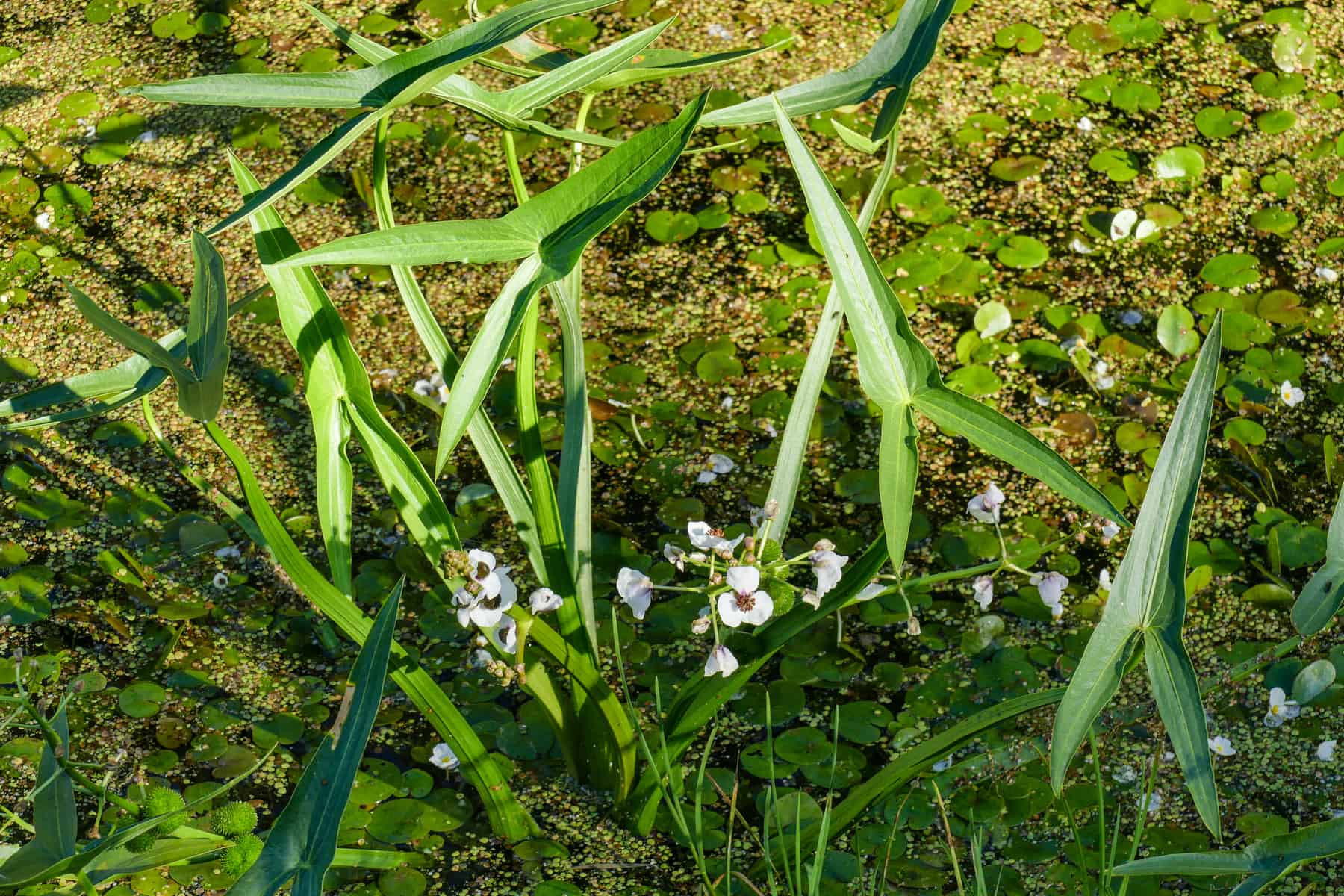
Sagittaria is a genus of aquatic plants with around 30 species distributed across the Americas, with some varieties found in Africa, Asia, and Europe. You might hear it called by several common names:
- Dwarf Sagittaria (the aquarium variety)
- Arrowhead
- Duck potato
- Swamp potato
- Wapato
- Katniss
- Tule potato
? Did You Know?
The name “katniss” became famous from The Hunger Games, but it’s a real plant that Native Americans harvested for food. The starchy tubers were cooked and eaten much like potatoes — which is why it’s also called “duck potato” and “swamp potato.”
The species most commonly used in aquariums is Sagittaria subulata, also known as dwarf Sagittaria. It’s native to the eastern United States and Colombia, where it grows in shallow coastal waters, estuaries, marshlands, and freshwater streams. This adaptability is exactly what makes it such an easy plant to keep in home aquariums — it’s already accustomed to fluctuating conditions in the wild.
While Sagittaria thrives in the aquarium hobby, it has become an invasive species in some regions, including Indonesia, the Azores, and Great Britain. This aggressive growth habit is actually good news for aquarists — it means the plant establishes quickly and spreads reliably in your tank.

Appearance
While many Sagittaria species have the distinctive arrow-shaped leaves that give the plant its “arrowhead” nickname, dwarf Sagittaria (S. subulata) looks quite different. In the aquarium, it produces long, narrow, grass-like leaves that grow up to half an inch wide. The overall effect resembles a lush underwater lawn — similar to Vallisneria but typically shorter and more compact.
The leaves are bright green under standard lighting conditions. However, under high-intensity lighting, they often develop an attractive reddish or bronze tinge along the edges and tips. This color variation adds visual interest and can help you gauge whether your lighting is on the higher or lower end of what the plant prefers.
When conditions are ideal — good lighting, adequate nutrients, and stable water parameters — Sagittaria will produce tall flower stalks that extend above the water surface. These stalks bear small, delicate white flowers with three petals each. While flowering isn’t common in aquarium settings, it’s a sign that your plant is thriving. Some hobbyists even [INTERNAL LINK: “use emergent growth setups” -> paludarium guide] to encourage flowering.
? Quick Care Overview
Care and Maintenance
One of the biggest reasons Sagittaria is so popular among aquarists is how little fuss it requires. Unlike demanding species that need precise CO2 injection, specific fertilizer regimens, and carefully calibrated lighting, dwarf sag adapts to whatever reasonable conditions you provide. That said, understanding its preferences will help you get the best growth and healthiest plants.
Water Conditions
Dwarf Sagittaria is remarkably tolerant of varying water chemistry. It’s one of the few aquarium plants that can handle hard water and elevated pH levels that would cause other species to struggle. This makes it an excellent choice for hobbyists dealing with naturally hard tap water who don’t want to invest in RO systems or chemical adjusters.
The ideal pH range is 6.5 to 7.5, but the plant will survive — and often thrive — in water outside this range. Many hobbyists successfully grow Sagittaria in African cichlid tanks with pH levels pushing 8.0 or higher.
Temperature flexibility is another strength. Sagittaria grows well in water between 72°F and 82°F (22–28°C), covering the typical range for most tropical community tanks. It also handles cooler temperatures, making it suitable for [INTERNAL LINK: “coldwater setups” -> coldwater aquarium fish] or unheated tanks in temperate climates. You can even keep it in brackish aquariums with low to moderate salinity — a testament to its estuarine origins.
Lighting
Sagittaria is often described as a “moderate light” plant, but it’s actually quite adaptable across the lighting spectrum. Here’s what to expect at different light levels:
Low light (1–2 watts per gallon or 20–40 PAR): The plant will survive and grow slowly. Leaves stay green and may appear somewhat sparse. Growth will be primarily horizontal as runners spread across the substrate.
Moderate light (2–3 watts per gallon or 40–80 PAR): This is the sweet spot for most aquariums. You’ll see healthy vertical growth, dense leaf production, and steady runner propagation. Leaves remain bright green.
High light (3+ watts per gallon or 80+ PAR): Growth accelerates significantly, and leaves often develop attractive reddish or bronze coloration. The plant may produce flower stalks. At this level, ensure adequate nutrients to prevent deficiencies — fast growth means higher nutrient demand.
Modern LED fixtures work excellently for growing Sagittaria. If you’re using older fluorescent technology, T5 or T8 bulbs will provide sufficient intensity. The key is consistency — sudden changes in lighting duration or intensity can stress the plant and cause temporary melting.
? Pro Tip
If your Sagittaria is growing tall and leggy instead of forming a dense carpet, it usually means your lighting is too weak. The plant is “reaching” for more light. Increase intensity or lower your light fixture to encourage compact, carpet-like growth.
Nutrients
As a root-feeding plant, Sagittaria benefits most from nutrients delivered through the substrate rather than the water column. A nutrient-rich planted tank substrate like aquasoil, or even a layer of minerite clay tablets beneath regular gravel, will give your plants a strong foundation.
If you’re using inert substrate like plain gravel or sand, supplement with root tabs placed near the plant bases every 2–3 months. You can also dose liquid fertilizers into the water column — the plant will absorb nutrients through its leaves, though less efficiently than through its roots.
?? Watch for Iron Deficiency
Sagittaria is particularly sensitive to low iron levels. If you notice leaves turning yellow or pale (especially new growth), iron deficiency is the most likely culprit. Add an iron-containing fertilizer or supplement specifically with chelated iron to reverse the yellowing.
CO2 injection is not required for healthy Sagittaria growth. The plant evolved in environments with naturally low carbon dioxide availability and has efficient carbon uptake even without supplementation. That said, if you’re running CO2 for other plants in your tank, Sagittaria will certainly benefit from it with faster growth and more vibrant coloration.
Tank Placement
Where you plant your Sagittaria depends on the look you’re trying to achieve and the conditions in your tank:
Foreground carpet: Under moderate lighting, dwarf sag stays relatively short (4–6 inches) and spreads horizontally to create a grass-like carpet. This is the most popular use and creates a natural “lawn” effect that works beautifully in [INTERNAL LINK: “aquascaped tanks” -> aquascaping for beginners].
Midground accent: Under high lighting with excellent nutrients, the plant can reach 10–12 inches tall. In this case, plant it in the midground where the taller growth won’t block your view of the tank’s background.
Background filler: In nano tanks or shallow setups, even the taller growth works well as a background plant, creating a dense wall of green behind smaller foreground species.
When planting, bury just the roots and the very base of the plant. Don’t bury the crown (where the leaves emerge) too deeply, as this can cause rot. Give each plant cluster about 2–3 inches of space initially — they’ll fill in the gaps as runners spread.
Propagation
Propagating Sagittaria requires zero effort on your part — the plant does all the work. Like many grass-like aquatic plants, it reproduces by sending out horizontal runners through the substrate. These runners push along just beneath the surface, periodically sending up new plantlets as they go.
Over time, a single Sagittaria plant can colonize a significant portion of your tank floor, creating a connected network of plants. This is exactly what you want for a carpet effect. If you’d like to speed up the process, ensure optimal lighting and nutrient availability — well-fed plants in bright light produce runners much faster.
To transplant Sagittaria to another tank or share with a friend, simply pinch or cut the runner connecting a daughter plant to the mother plant. Gently uproot the daughter plant (keeping as many roots intact as possible) and replant it in the new location. The separated plant will establish itself within a week or two.
? If Sagittaria starts overtaking slower-growing plants, simply pinch off the runners heading toward those areas. Regular trimming keeps the carpet contained to where you want it. Remove dead or yellowing leaves by pinching them off at the base — they’ll detach cleanly.
Where to Buy Sagittaria
Dwarf Sagittaria is one of the most widely available aquarium plants. You’ll find it at most local fish stores, large pet chains, and specialty aquarium shops. Availability is consistent year-round since the plant propagates so easily in commercial nurseries.
Online retailers also stock Sagittaria regularly. When ordering plants online, check the seller’s reviews and shipping policies — live plants can suffer in transit if not packaged properly. Many sellers offer heat or cold packs during extreme weather, which helps ensure your plants arrive healthy.
Expect to pay between $3 and $8 per portion (typically 5–10 individual plantlets). Because the plant propagates so readily, buying even a small starter portion will eventually fill your tank — you just need patience. Some hobbyists in local aquarium clubs give away Sagittaria trimmings for free, so check local forums or Facebook groups if you’re looking to save money.
Frequently Asked Questions
How tall does dwarf Sagittaria get?
In typical aquarium conditions with moderate lighting, dwarf Sagittaria stays between 4–6 inches tall and forms a carpet. Under high lighting with excellent nutrients, it can stretch to 10–12 inches. If your plants are growing taller than you’d like, reducing light intensity will encourage shorter, more compact growth.
Does Sagittaria need CO2 injection?
No, Sagittaria does not require CO2 injection to thrive. It grows well in low-tech setups without supplemental carbon dioxide, making it ideal for beginners or hobbyists who want to avoid the complexity and expense of CO2 systems. If you do run CO2, the plant will grow faster, but it’s entirely optional.
Why is my Sagittaria turning yellow?
Yellowing leaves are almost always a sign of iron deficiency. Sagittaria is particularly sensitive to low iron levels compared to other aquarium plants. Add root tabs containing iron near the plant bases, or dose a liquid iron supplement into the water column. You should see improvement within 1–2 weeks.
Can you grow Sagittaria in sand substrate?
Yes, Sagittaria grows fine in sand or gravel substrates. However, since these inert substrates don’t contain nutrients, you’ll need to supplement with root tabs every 2–3 months. Place the tabs within a few inches of the plant bases so the roots can access the nutrients.
Is katniss from The Hunger Games a real plant?
Yes! “Katniss” is another name for Sagittaria. The plant’s edible tubers were historically harvested by Native Americans as a food source, which is referenced in the books. Other common names include arrowhead, duck potato, wapato, and swamp potato — all referring to the starchy, potato-like tubers.
Final Thoughts
Sagittaria deserves its reputation as one of the best beginner aquarium plants available. It tolerates a wide range of water conditions, doesn’t require CO2 injection or high-tech equipment, and spreads on its own to create a natural carpet effect. Whether you’re setting up your first planted tank or looking for a reliable foreground plant for an established aquarium, dwarf sag is an excellent choice.
The plant’s adaptability to hard water, varying pH levels, and different temperature ranges means it works in almost any freshwater setup — from tropical community tanks to coldwater goldfish bowls to brackish aquariums. Just give it reasonable lighting, keep an eye out for iron deficiency, and let it do its thing.
Pick up a small portion from your local fish store or order online, plant it in your substrate, and within a few months you’ll likely have more Sagittaria than you know what to do with. And that’s exactly the kind of “problem” beginner aquarists should hope for.


