
Quick Answer
Jungle Val (Vallisneria americana) is one of the hardiest background plants in the hobby. It tolerates low-tech setups, doesn’t need CO2, and survives fish that destroy everything else. The catch: bury the crown and it dies. Keep the base exposed, plant in the back, and it will carpet your tank through runners within months.
Your Oscar just uprooted another Amazon sword. Your goldfish ate your Anubias down to the rhizome. You’re starting to think live plants and your fish are incompatible.
Jungle Val is the plant that changes that calculation. It roots so deeply that digging fish give up. Its leaves are tough enough that most herbivores ignore them. And unlike the delicate stem plants that melt when you look at them wrong, Vals actively want to take over your tank.
Jungle Val At A Glance
Scientific Name: Vallisneria americana
Common Names: Tape grass, eelgrass, water celery
Origin: Americas, Australia, Asia
Growth Rate: Fast
Height: 12-72 inches (tank-dependent)
Lighting: Low to high
CO2: Not required
Difficulty: Beginner
Temperature: 64-82F (18-28C)
pH Range: 6.0-9.0
Appearance
Jungle Val produces long, ribbon-like leaves that grow straight toward the surface. The leaves are bright green, slightly translucent, and have a distinctive grass-like texture. In a home aquarium, expect heights of 12-36 inches depending on tank depth and lighting. In ideal conditions with tall tanks and strong light, they can reach several feet and lay across the surface.
Several Vallisneria species appear in the aquarium trade under similar names. V. americana is the most common, but you’ll also see V. spiralis (twisted or corkscrew val), V. gigantea, and various regional variants. The care requirements are essentially identical across species – the main difference is mature leaf width and whether leaves grow straight or with a spiral twist.

Wild Habitat
In nature, Jungle Val grows in shallow, slow-moving water – lakes, ponds, streams, and even brackish bays where salinity is low. The plants typically root in water under ten feet deep, though the leaves often reach the surface and lay flat, soaking up sunlight.
Wild Val beds can stretch for acres, creating underwater forests that shelter fish, invertebrates, and waterfowl. This aggressive spreading habit is exactly what makes them so effective in aquariums – once established, they actively colonize available substrate through runners.
Tank Requirements
Tank Size
A 29-gallon tank is the practical minimum. You can technically grow Val in smaller setups, but you’ll be constantly managing leaves that want to take over the entire water column. In tanks 55 gallons and up, Val really comes into its own as a background curtain.
Substrate and Planting
Sand or fine gravel works best. Val is a root feeder with an aggressive root system – once established, even large cichlids struggle to uproot it.
[WARNING] The Crown Rule
The crown (where the leaves meet the roots) must stay above the substrate. Bury it and the plant rots from the base up. This is the number one reason people fail with Val – they plant it too deep, thinking deeper is more secure. It isn’t. Push the roots into the substrate, keep the crown exposed, and the plant anchors itself within weeks.
Water Parameters
Val tolerates a remarkably wide range: 64-82F, pH 6.0-9.0, and soft to hard water. It even survives brackish conditions, though growth slows significantly.
The one parameter that genuinely affects Val is water hardness. Soft, acidic water produces slower growth and thinner leaves. If your water is naturally soft and you’re seeing lackluster Val growth, that’s probably why. Hard, alkaline water is where this plant thrives.
[FACT] Val is one of the few aquarium plants that actually prefers harder, more alkaline water – the opposite of most planted tank species. If you’ve struggled with plants in hard water, Val is worth trying.
Lighting
Moderate to high light produces the fastest growth, but Val adapts to low light surprisingly well. Growth slows, leaves stay shorter, but the plant survives. A standard aquarium LED or T5 fluorescent is plenty.
CO2 and Fertilization
No CO2 injection required. Val evolved in shallow water with limited dissolved CO2 – it’s adapted to pull carbon from the water column efficiently.
Fertilization is optional but helpful. Val feeds through both roots and water column, so either root tabs or liquid fertilizer works. If growth seems slow or leaves look pale, an iron-rich fertilizer usually fixes it.
The Pruning Problem
Here’s where most Val care guides give you incomplete advice. They’ll tell you not to trim Val leaves because cut leaves rot. That’s true – but they don’t tell you what to do instead.
The reality: Val leaves that reach the surface and lay flat are doing exactly what they’re supposed to do. Cutting them causes the damaged portion to brown and decay, and can trigger the whole leaf to die back to the crown.
What actually works:
- If a leaf is damaged or dying, remove it completely at the base rather than trimming partway
- If surface coverage is blocking light to lower plants, remove entire leaves selectively rather than shortening them
- If you must trim, use extremely sharp scissors and cut at an angle – this gives the leaf the best chance of sealing and surviving
- The better solution is to choose a tank size appropriate for Val’s growth, or use shorter Vallisneria species like V. spiralis
Propagation
Val propagates through runners – horizontal stems that travel under the substrate and produce daughter plants at intervals. One healthy Val can produce dozens of offspring in a year.
Leave daughter plants attached to the parent until they’ve developed 4-5 leaves and their own visible root system. At that point, you can cut the runner and relocate the new plant. Expect about a month of adjustment before the transplant starts growing actively.
[TIP] Pro Tip
If your Val is sending runners where you don’t want them, you can redirect the runner by gently bending it in your preferred direction and pinning it down with a small rock or plant weight. The daughter plants will establish where you guide them.
Best Tankmates
Val’s toughness makes it one of the few plants that works with:
- Cichlids – including diggers like Oscars and Jack Dempseys
- Goldfish – they may nibble but rarely do serious damage
- Silver Dollars and Tinfoil Barbs – aggressive herbivores that destroy most plants
- Plecos and other Loricariids – Val survives the bulldozing
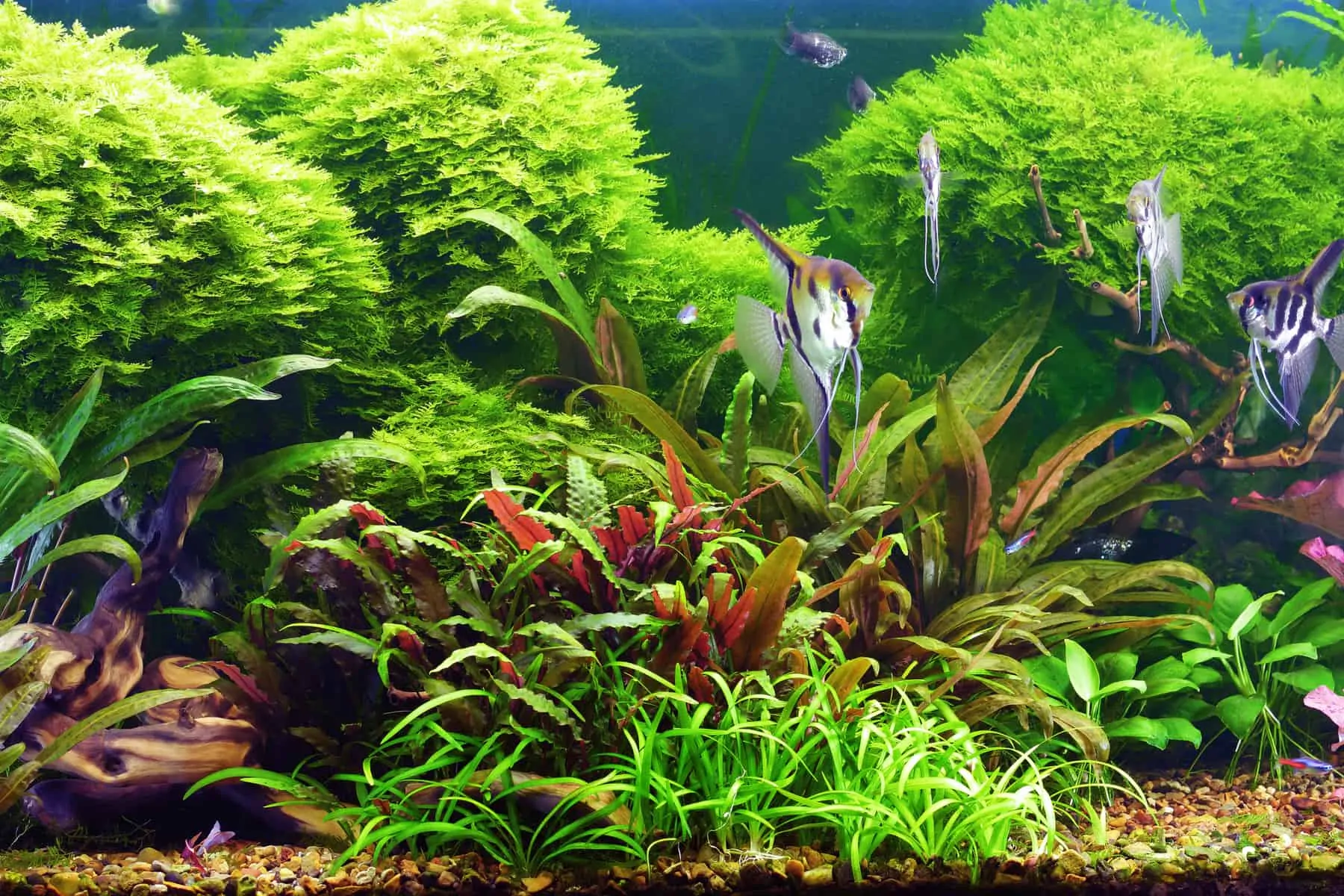
The leaves aren’t appetizing to most fish, and the root system anchors too deeply for casual uprooting. This is the plant for tanks where everything else has failed.
Common Problems
Melting After Purchase
Val often melts back when first added to a tank, especially if transitioning between very different water parameters. This is normal. Leave the roots in place – new growth usually emerges within 2-4 weeks once the plant adapts.
Slow or Stunted Growth
Usually caused by soft, acidic water or insufficient light. If your water is naturally soft, consider whether Val is the right choice, or try raising hardness slightly. An iron supplement can also help.
Excel and Liquid Carbon
Glutaraldehyde-based “liquid CO2” products (Seachem Excel, API CO2 Booster, etc.) can melt Val. Some tanks have no issues; others see rapid leaf death. If you’re using these products and your Val is struggling, that’s likely the cause.
Frequently Asked Questions
Does Jungle Val need CO2 injection?
No. Jungle Val is native to shallow water environments with low dissolved CO2 and has evolved to thrive without supplementation. It grows well in low-tech setups with no CO2 injection.
Can you trim Jungle Val leaves?
Trimming causes cut leaves to brown and decay, often killing the entire leaf. Remove whole leaves at the base instead of cutting them shorter. If trimming is unavoidable, use very sharp scissors and cut at an angle to give the leaf the best chance of survival.
Why is my Jungle Val melting?
New Val commonly melts back while adapting to different water parameters – this is normal and new growth usually appears within 2-4 weeks. If established Val starts melting, check for Excel or liquid carbon products, which can harm Val in some tanks.
Is Jungle Val a root feeder or water column feeder?
Both. Val absorbs nutrients through its extensive root system and through its leaves from the water column. You can use root tabs, liquid fertilizer, or both – either approach works.
How do you plant Jungle Val so it doesn’t die?
Push the roots into the substrate but keep the crown (where leaves meet roots) above the substrate surface. Burying the crown causes it to rot. This is the most common mistake with Val – people plant too deep thinking it’s more secure, but it kills the plant.
Jungle Val isn’t glamorous. It won’t win any aquascaping contests against Dutch-style layouts or nature aquariums with carpeting plants and intricate hardscape. But when you need a plant that actually survives the fish you keep – the diggers, the bulldozers, the species that treat every other plant as salad – Val delivers. Plant it in the back, keep the crown exposed, and get out of its way. [INTERNAL LINK: “background aquarium plants” -> background plants guide] [INTERNAL LINK: “easy beginner plants” -> beginner aquarium plants]