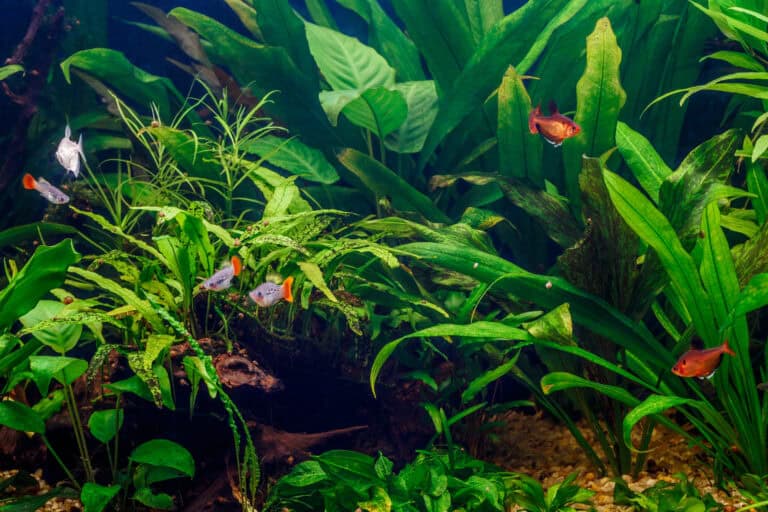
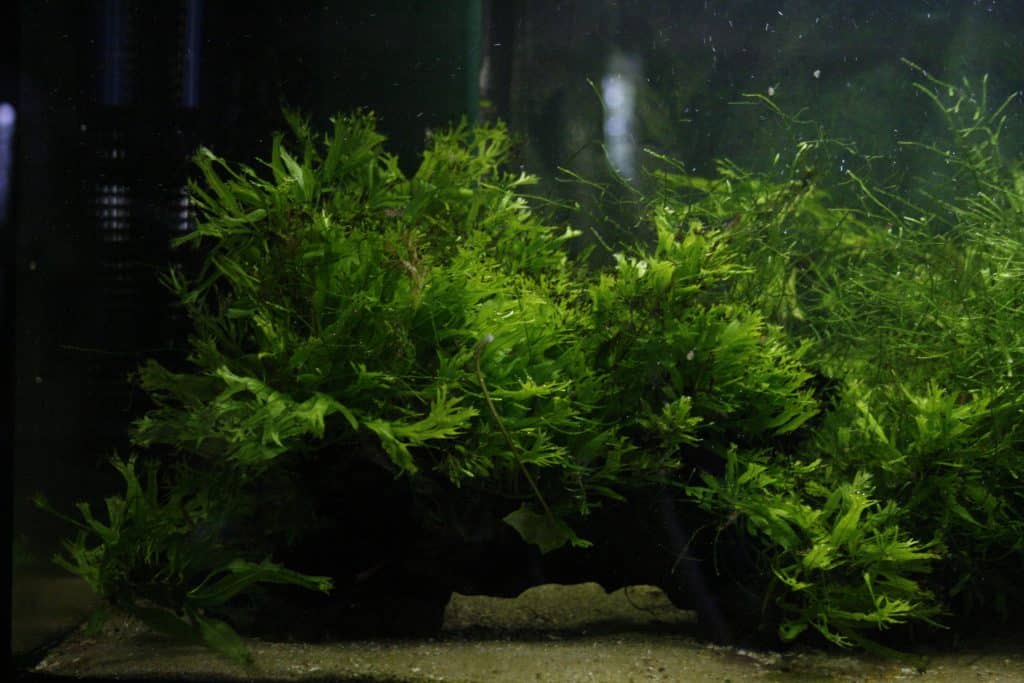
You just bought a beautiful Java fern or Anubias — but if you plant it in the substrate like a regular aquarium plant, it will slowly rot and die. These plants need to be attached to hardscape instead, and the good news is that the process takes less than five minutes once you know what you’re doing.
Quick Answer
Use fishing line or cotton thread to tie epiphyte plants (Java fern, Anubias, Bucephalandra) to porous rock or driftwood. Position the rhizome against the hardscape, wrap securely but not too tight, and trim excess line. The plant will naturally root itself within 4-8 weeks.
Why Some Aquarium Plants Can’t Be Planted in Substrate
Most aquarium plants grow with their roots buried in gravel or soil — but epiphyte species like Java fern, Anubias, and Bucephalandra are different. These plants have a thick horizontal stem called a rhizome that must stay exposed to water flow. When you bury the rhizome in substrate, it suffocates and rots, causing the entire plant to decline over weeks or months.
In the wild, these plants grow attached to rocks, fallen logs, and tree roots along riverbanks. Replicating this in your aquarium isn’t just about aesthetics — it’s essential for the plant’s survival. The roots will eventually grip onto the hardscape naturally, but they need help staying in place during the first few weeks.
? Plants that must be tied (not planted): Java fern (all varieties), Anubias (all species), Bucephalandra, Bolbitis, and African water fern. If you’re unsure, check whether the plant has a visible rhizome — a thick, horizontal stem where the leaves emerge.
Note: For detailed care information, see our full Java fern caresheet and Anubias guide.
What You’ll Need to Attach Plants to Hardscape
? What You’ll Need
- Fishing line (clear monofilament, 6-10 lb test) — nearly invisible once submerged
- Rock or driftwood — porous surfaces like lava rock or Malaysian driftwood work best
- Your epiphyte plant — Java fern, Anubias, Bucephalandra, etc.
- Sharp scissors — to trim excess line cleanly
Alternative attachment methods: Some hobbyists prefer cotton thread (which dissolves over time as the plant roots), super glue gel (cyanoacrylate — aquarium safe once cured), or plant weights. Fishing line remains the most reliable method because it’s strong, invisible, and gives you time to reposition if needed.

Step-by-Step: How to Tie Aquarium Plants to Rock or Driftwood
Prepare your plant
Remove the plant from its pot and gently rinse away any rock wool or gel medium clinging to the roots. Inspect the rhizome for any soft, mushy sections — these should be trimmed away with clean scissors to prevent rot from spreading.
Position the plant on your hardscape
Place the rhizome flat against the rock or driftwood surface. Look for natural crevices or rough areas where the roots can eventually grip. The leaves should point upward or outward — never bury any part of the rhizome against the surface where water can’t flow.
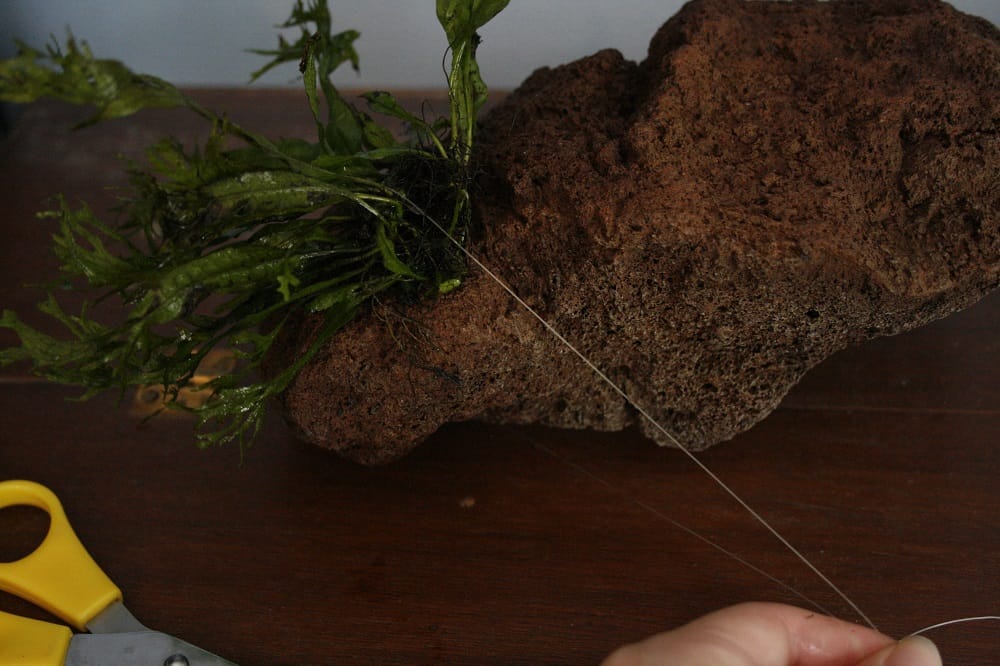
Wrap the fishing line around the rhizome and hardscape
Cut about 12-18 inches of fishing line. Wrap it around the rhizome and rock/wood 3-4 times, keeping even tension. You want it snug enough that the plant won’t slip when submerged, but not so tight that you’re crushing the rhizome. Tie off with 2-3 secure knots.
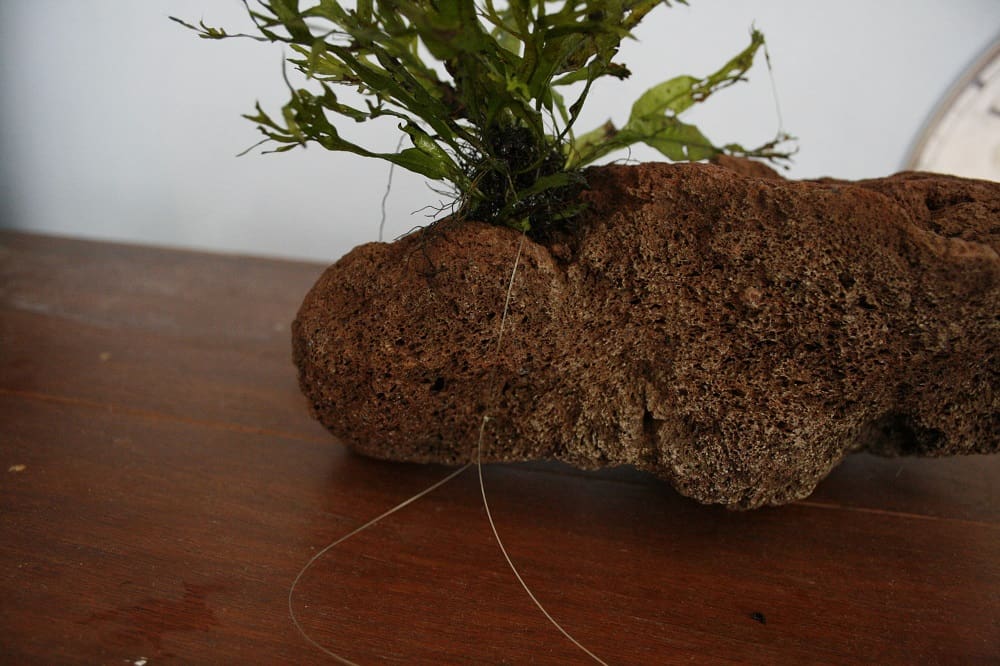
Trim the excess fishing line
Cut the line as close to the knot as possible. Loose ends can snag on fish fins or decorations, and they’re more visible than a clean trim. A sharp pair of scissors makes this much easier than trying to bite through monofilament.
Place in your aquarium and wait
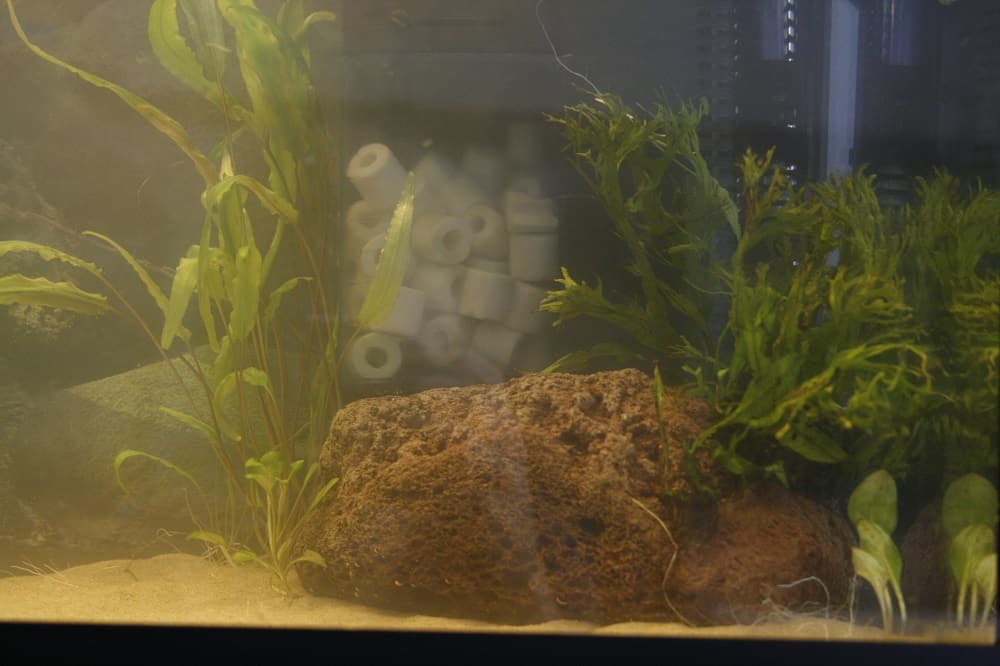
Carefully lower the rock or driftwood into your tank and position it where you want the plant to grow. Within 4-8 weeks, the roots will grip the surface firmly enough that you can remove the fishing line — though leaving it in place won’t cause any harm.
Pro Tips for Better Results
? Pro Tip
Position the knot at the bottom or back of the rock where it’s hidden from view. This also keeps any sharp line ends away from fish that swim near the surface or have flowing fins like bettas and fancy goldfish.
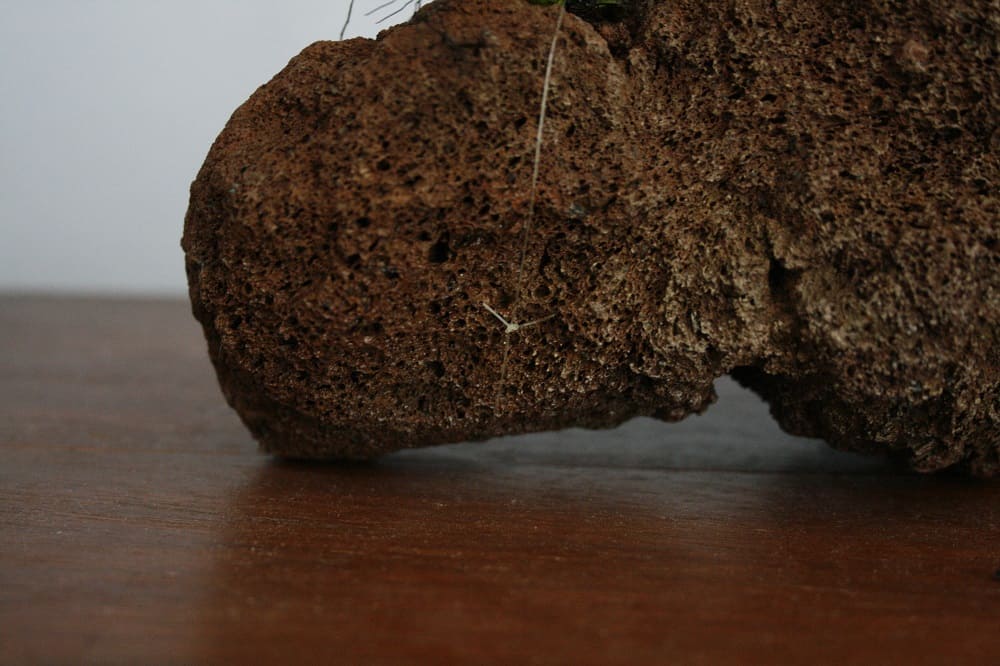
Choose the right hardscape surface. Smooth river rocks and polished driftwood look beautiful, but the plant roots can’t grip them well. Porous materials like lava rock, dragon stone, and textured driftwood work much better. Lava rock is particularly good because it’s lightweight (won’t crack glass if it shifts) and has countless tiny pores for roots to anchor into.
Don’t tie too tightly. The rhizome is the lifeline of the plant. Crushing it with overtight line will damage the tissue and cause the plant to decline. You want secure, not strangling.
Consider using super glue for difficult spots. Cyanoacrylate gel (super glue gel, not liquid) is aquarium-safe once cured. Dab a small amount on the rhizome, press it against the hardscape for 30 seconds, and you’re done. This works especially well for Anubias petite and other small plants that are fiddly to tie. [INTERNAL LINK: “super glue plants” -> aquascaping techniques]
Remove the line once rooted (optional). After 4-8 weeks, check whether the plant is firmly attached by gently tugging it. If it holds, you can snip and remove the fishing line for a cleaner look. If you used cotton thread, it will have already dissolved by this point.
?? Important
Never bury the rhizome in substrate or wedge it into a crack where water can’t circulate. Even partial burial can cause rot. The rhizome should always be fully exposed with water flowing around it.
Comparison: Attachment Methods for Epiphyte Plants
| Method | Pros | Cons | Best For |
|---|---|---|---|
| Fishing line | Nearly invisible, repositionable, very secure | Must trim carefully; can snag fins if sloppy | Most situations; larger plants |
| Cotton thread | Dissolves naturally in 2-4 weeks | Less secure; may break before roots grip | Fast-rooting plants; clean aesthetic |
| Super glue gel | Instant attachment; no visible line | Permanent; can’t reposition | Small plants; tight spaces; aquascaping |
| Plant weights | No tying required | Visible; can crush delicate rhizomes | Temporary holds; weighted stem plants |
? Did You Know?
Java fern and Anubias are epiphytes — plants that grow on other surfaces rather than in soil. In their native Southeast Asian and African habitats, they cling to rocks in streams and rivers, where seasonal flooding would wash away any plant rooted in sediment. Their adaptation to attach to hard surfaces is actually a survival strategy.
Frequently Asked Questions
How long does it take for Java fern to attach to driftwood?
Java fern typically takes 4-8 weeks to develop roots strong enough to grip driftwood or rock securely. Warmer water (75-80°F) and good lighting speed up the process. You’ll know it’s attached when the fishing line is no longer holding the plant in place — the roots are.
Can I use regular thread instead of fishing line?
Yes, cotton thread works well and has the advantage of dissolving naturally in 2-4 weeks. However, it’s less secure than fishing line and may break before slow-rooting plants like Anubias have attached. Avoid synthetic threads (polyester, nylon sewing thread) as they don’t dissolve and are more visible than fishing line.
Is super glue really safe for aquariums?
Pure cyanoacrylate super glue (the gel formula, not liquid) is aquarium-safe once cured, which takes about 30-60 seconds. It becomes inert when it hardens. Avoid super glues with added fillers or “brush-on” formulas. Many aquascapers use this method exclusively for attaching mosses and small Anubias.
My Java fern’s rhizome is turning brown — is it dying?
A brown rhizome usually indicates rot from being buried or tied too tightly. If it’s soft and mushy, trim away the damaged sections with clean scissors until you reach firm, green tissue. The plant can often recover if some healthy rhizome remains. Going forward, make sure the rhizome is fully exposed to water flow.
Can I tie multiple plants to the same piece of driftwood?
Absolutely — this is a great way to create natural-looking aquascapes. Just space the plants a few inches apart so they have room to grow. Mixing species (Java fern with Anubias, for example) creates visual interest. Consider the mature size of each plant so they don’t crowd each other in a few months. [INTERNAL LINK: “aquascaping driftwood” -> aquascaping guides]
Have questions about tying plants or attaching them to hardscape? Leave a comment below — I’m happy to help troubleshoot. Happy fishkeeping!